



Estimated reading time: 13 minutes
Find out how to build wealth and reduce debt with these practical money-saving strategies. Take control of your finances and secure a prosperous future.
There are good saving strategies and innovative money-saving strategies that increase wealth and reduce debt.
Today, I’d like to discuss money-saving strategies that we use to reduce debt and increase wealth.
Not all of these saving strategies are one-size-fits-all. However, you’ll get an idea of where to begin.
Saving Strategies Are How The Rich Become Richer
Managing your money when you are younger will dictate how wealthy you will be in your senior years.
You must have money-saving strategies; otherwise, you only take on essential financial opportunities if you save anything.
I’ve often heard that the only way to be financially successful is to start investing early money.
Although there is much truth to this, you can still build your net worth and crush debt at any time in the game.
The only difference will be the numbers, and although you won’t have as much money socked away, at least you’d have something.
Tackling Money-Saving Strategies
I often hear and read the same thing about money-saving strategies, but here’s the thing: not everyone is doing it.
We continue to be hounded by the media, bloggers, government, and banks about money because of debt.
Too many Canadians are sitting in debt, and they struggle to pay it back, continuing to play cat and mouse with their finances.
At some point, some people give up on the money they owe and would rather juggle it than deal with it.
There has to be a solution, doesn’t there?
Best Saving Strategy If It’s The Only One You Choose
The most obvious would be to stop spending money on stuff and take your finances seriously.
The number one best saving strategy on the most basic level that I urge everyone to consider is to spend less than you earn.
If you can’t do that, consider your options because you will quickly be in a bad financial situation.
The easy part is to feel miserable about your current money situation. The hard part is finding somewhere to live when you are homeless.
Don’t mistake waiting until the walls come crashing in to get motivated, seek help, or hope for a miracle.
Unfortunately, many of us won’t see financial miracles unless we make them happen independently.
Money-Saving Strategies Fuel Tomorrow
I can’t stress enough how much money you will need in your retirement years, especially if you become ill or need to go into a retirement home or assisted living.
When you retire, having money in the bank is the difference between a private room and sharing a room for the rest of your life.
Perhaps you don’t care today, but you will care tomorrow when it’s your turn.
Not everyone is in a retirement home, so you must still pay for everyday expenses.
Our neighbor is 91 years old and has no sign of heading into any retirement villa as he’s content in his home.
Like everyone else, he still has utilities, property taxes, and other basic budget expenses.
There is never a point where money won’t matter in your life because even when you’re dead, someone has to pick up the pieces, and that still costs money.
- How would you like to be buried?
- Who will fund your funeral?
- Who’s going to take over closing your affairs?
Someone has to do the work.
Penny-Pinching Money-Saving Strategies

There hasn’t been a time in both of our lives that we haven’t been made fun of due to our frugal lifestyle.
We still use coupons to lower our grocery budget and often shop at second-hand stores for deals.
Most of the extra money we earn comes from buying and selling, also known as profit income.
Previously, we would earn rental income from renting rooms in our house to international students tax-free.
We would do almost anything to save or earn extra money to get ahead.
Creating The Financial Life You Want
Today, this blog earns us a nice monthly profit, but that took us years to accomplish; however, it’s made income on a passive level.
Whether I publish a blog post or not, I still work on the blog daily, so I spend time working on my cash hobby.
Besides spending less than we earn over the years, we’ve fine-tuned many money-saving strategies that have helped us reach millionaire status.
It’s not that much in today’s money, considering high home prices in many parts of Ontario, but the big thing is that we are debt-free.
Our house is fully paid off, and we purchased our new vehicle with cash.
Related: How We Became Mortgage-Free In 5 Years
We pay ourselves first every month by investing in our retirement and our son’s future.
These are not things we started when we became debt-free either, and it has been ongoing since we were in our 20s.
Let’s have a look at some of our money-saving strategies that everyone should at some point evaluate.
1. Approve Your Mindset Reset
Our money-saving strategies have grown over the years by incorporating financial education, which has helped us pay off our debts.
As we call it, this mindset reset took time to flourish because there is much to learn.
With a slight mindset shift from a spender to a saver, we can tell you that you have quickly taken the first step to financial freedom.
All you need to do is believe you can become debt-free and find ways to make money work for you instead of against you.
Once you start to see your debts disappear and your bank account grows, this is the point where you know you’ve made progress.
The key is to build on that success by pushing the limits and finding alternate income streams to reach your financial goals.
2. Tracking Our Spending
There’s budgeting, and then there is tracking your spending, both of which we do.
Tracking our expenses meant that we documented every dollar we spent in our Excel spreadsheet.
Doing this allowed us to see our monthly expenses in each budget category and what they were for.
This was one of our smartest beginnings because it helped us determine where more effort was needed.
Even though we are debt-free today, we still collect every receipt to track them.
Another thing we learned during the process of tracking expenses is how much our utilities were costing us.
You don’t look at the yearly expenses, but your jaw should drop when your mobile phone costs $2000.
Our hydro costs were through the roof, which prompted us to live by our smart meter and time of use.
Even the most minor changes help the overall purpose of saving money.
3. Budgeting Your Money
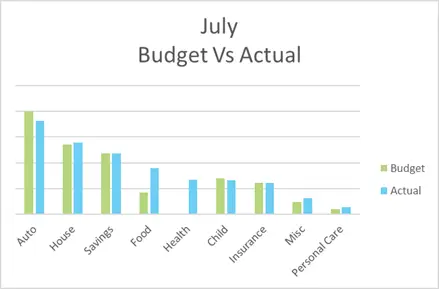
Tracking your expenses and budgeting is different since one balances numbers, and the other tells you a story.
Without budgeting, we would not be in the financial position today.
I didn’t start this blog to tell everyone that a budget would work for them, but I have said that you can work with a budget.
I know many people who use a budget and fail miserably at it.
I’m not particularly eager to give the impression that you’re safe from debt just because you use a budget.
Related: Magic Budgeting Jars Saved This One Couple
A budget takes work to earn money, spend the money, save the money, and balance the money.
You have to put in time for a budget to work and help you pay down your debts and ultimately build wealth.
Take it from a budgeting expert; your budget will make you happy if you follow the rules.
Related: Budgeting with Mr. CBB Got Us Back On Track
No fudging numbers or making excuses for your budget, or it can get nasty for you quickly.
If your budget is not going as planned, evaluate the areas you are failing in and explain why.
You must find an alternate income stream if you aren’t earning enough money and cannot pay your gas bill each time.
Related: CBB 10 Step Mini Budgeting Series (Plus Free Budget Download)
4. Debt Repayment
After getting married, we still had a van payment, costing us just under $500 a month.
We were only renting then, and with one income, we still managed to squeeze in extra payments to knock that debt out of our lives.
Whenever we had a debt, we paid it off the same month and have continued doing so ever since.
Large loans such as mortgages, car loans, and school loans take time to repay, and little things like credit card debt should not.
If you spend what you can afford and pay your credit card monthly, you should avoid the debt trap.
Keep up with your emergency savings account to build 6-12 months of savings for when you are in need.
It shouldn’t have to fund your credit card unless a significant expense must be incurred as a roof caved in.
5. Downsize Your Home

We didn’t downsize our home. Instead, we bought a house that we could afford a mortgage on one income.
Many people who use their incomes to pay their mortgages and expenses might struggle if they lose their jobs.
The good thing is that if you own a home, you can at least sell it to downsize, but if you are renting, you may need to source a cheaper place to live.
If you look around where you live now and realize that you don’t use the space you are paying for as much as you thought, downsize.
Find a home that will cost you less in the long run and where you will utilize all of the areas you pay.
Spending less on housing is a huge saving that you can put towards other areas of your budget.
6. Eliminate The Vehicle

We had two vehicles, and one was sitting outside for over a year, which I had planned on fixing, only to find it was too expensive.
Instead of paying insurance costs on the vehicle, we sent it to the scrapyard, collected our three hundred dollars, and went on our way.
If you live close to work or can take the bus, ride-share, or ride a bike and can eliminate owning a vehicle, why not?
You eliminate insurance, gas, overall maintenance costs, and any loans for the vehicle if you get rid of them.
7. Types of Income Streams To Consider
If you are considering other income streams, there’s a chance that you might run into those listed below.
The great thing about income streams is that there are so many availabilities that you can choose from.
Related: How many income streams do you need?
1. Passive Income Stream
Although I worked hard on marketing this blog and having a social media presence, I still earn monthly income even if I reduce my workload or quit it.
It is great to build something from scratch that earns money while you sleep, although it does take time.
Related: How I made my first $100 from blogging
Dividend income with investing is another form of passive income where a shareholder is paid stocks in cash.
You can earn passive income from YouTube and Instagram or rent your stuff.
Passive income opportunities are endless.
- How To Start A Blog And Make Money Part One
- How To Start A Blog And Make Money Part Two
- How To Start A Blog And Make Money Part Three
2. Rental Income Stream
This is where you earn money from renting out property, such as an apartment, house, or room.
By doing this, you earn extra income to feed your budget so you can pay off your debts accordingly.
When we bought our house, we got involved with Red Leaf Canada and became a host family.
The students were terrific and loved Canada, and best of all, we got paid tax-free income.
3. Earned Income Stream
This is where you go to work and earn income from your job.
If you aren’t making enough money, you may want to consider a second job to earn more income or take extra hours at work.
4. Profits Income Stream
This is where you buy and sell and earn profit from your efforts.
For example, we believe and sell items from second-hand shops to make extra money.
You might be handy at fixing lawnmowers and picking them up broken for free or cheap, then repair and sell them for more money.
Now, this is where you buy low and sell high for profit.
8. Royalties Income Stream
You may have work you’ve created that someone else wants to use but pays you income called royalties.
This may be a computer program you’ve created, performance royalties in music, literary works (write a book), patents, copyrights, and trademarks.
Money-Saving Strategies Recap
- Spend Less than you earn
- Track your expenses
- Budget your money
- Pay down your debt as fast as you can
- Downsize when and where possible
- Find alternative forms of transportation besides a vehicle
- Incorporate various income streams to keep the cash flow coming in
- Change your money mindset.
Although we are continually told why saving money is essential, we often must say more than once.
Sometimes, that’s all we need to get the ball rolling because we eventually sink or swim.
The choice is yours because we all start richer than someone else.
Discussion: What money-saving strategies have you incorporated into your financial goals?
Leave me a comment below, as I enjoy your feedback.
Thanks for reading,
MR.CBB