


Estimated reading time: 7 minutes
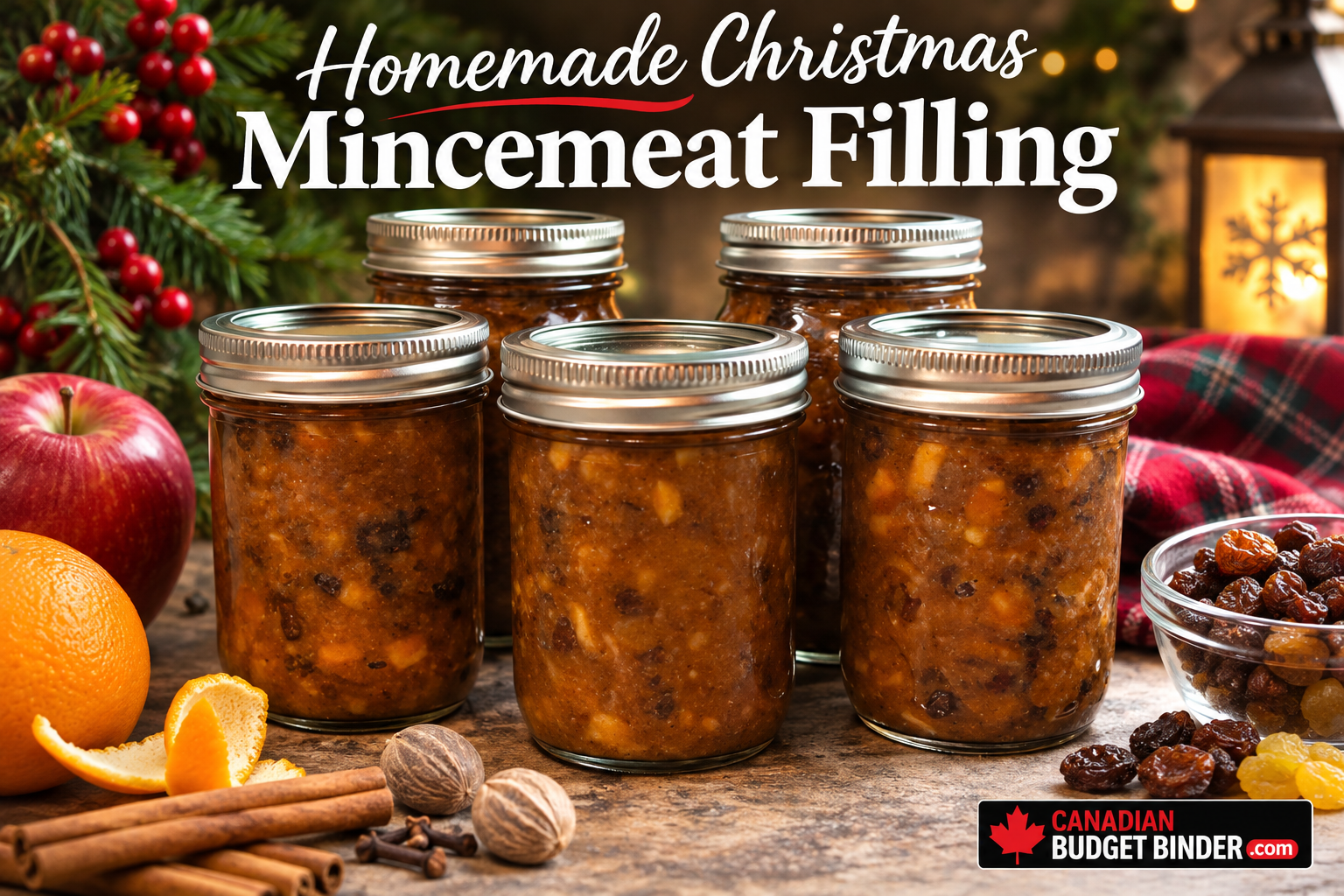
Christmas mincemeat is the sweet, spiced fruit filling used in traditional British mince pies. Nicola Don, a Scottish contributor to Canadian Budget Binder, shared her family’s version in 2013 with currants, sultanas, raisins, apples, candied citrus peel, almonds, warm spices and brandy or port.
This is Part 1 of Nicola’s two-part Christmas baking tradition. In Part 2, Scottish double-crust mince pies, the fruit filling is baked inside a buttery shortcrust pastry shell and lid.
Nicola Don’s Christmas memories from Scotland
Nicola shared these recollections in her original post:
I love Christmas and miss spending it with our families in Scotland since we’ve moved to Canada.
We still Skype on Christmas day, but it’s not the same as seeing them in person.
Christmas is still a big celebration in our house as it’s time spent with good food and friends who are more like family.
Her family’s favourite Christmas recipes brought familiar Scottish holiday traditions into her life in Canada. Mince pies were an especially welcome seasonal treat. Nicola shared the mincemeat filling first, and later returned with the pastry and instructions for individual double-crust pies.
These are Nicola’s own memories, not memories of Mr. CBB or his family.
What is Christmas mincemeat?
Mincemeat is a mixture of dried fruit, citrus, sugar and spices used for Christmas baking. The name comes from older versions that included minced meat. In many modern recipes, including Nicola’s, dried and fresh fruit make up the bulk of the mixture.
The filling is sweet rather than savoury, but not necessarily vegetarian: Nicola’s original recipe offers shredded suet as one fat choice. Traditional suet can be animal-derived, so read ingredient labels if preparing a vegetarian dish.
The history of Christmas mincemeat: from meat pies to fruit filling
The name mincemeat is a clue to its past. Medieval English cooks made pies that combined chopped meat with dried fruit and spices, a sweet-and-savoury combination that was considered special-occasion food. English Heritage’s history of mince pies traces this tradition back centuries, including a 1591 recipe with beef or mutton, suet, raisins, currants and warming spices.
Christmas pies changed as tastes and ingredients changed. By the nineteenth century, recipes were being published both with and without meat. English Heritage notes that by the twentieth century, the remaining animal ingredient in many mince pies was suet, and modern versions can use vegetarian alternatives. This is why a sweet fruit filling still carries a name that sounds like a savoury dish.
For Nicola Don, the point of this traditional filling was more personal than its long history: Christmas baking connected her Canadian home with the family celebrations she remembered in Scotland. Her recipe uses currants, raisins, sultanas, candied peel, apples and familiar festive spices. In Part 2, she turns the filling into individual double-crust mince pies.
Christmas mincemeat variations through the years
There is no single British or Scottish mincemeat recipe that every family follows. The balance of dried fruit, apple, citrus, warming spices and rich ingredients can change from one household to the next. Nicola’s version combines currants, sultanas, raisins, apple, candied peel, almonds and brandy or port. Other Christmas bakers put their own stamp on the tradition.
- Extra festive fruit: Some versions include dried cranberries, cherries, figs or chopped dried apricots alongside the more familiar raisins and currants.
- Nuts and citrus: Chopped almonds or mixed nuts add a little texture, while orange and lemon zest brighten the sweetness of the dried fruit.
- Different fats: Traditional beef suet appears in older recipes, while some modern recipes use vegetarian suet or butter. The right choice depends on the recipe and dietary needs.
- Different flavourings: Brandy, port, rum and a variety of warm spices appear in different mincemeat recipes. Alcohol-free versions also exist, using methods designed for those particular ingredients.
For examples of the fruit-and-nut variations, see Good Food’s jewelled mincemeat and its traditional mincemeat recipe. These are different recipes, not measured substitutions or storage instructions for Nicola’s version.
More ways to enjoy mincemeat at Christmas
Although Nicola’s favourite use is the traditional double-crust mince pie, fruit mincemeat can also be found in open tarts, pastry twists, slices and other Christmas bakes. Different bakers use different fillings and pastry styles, but the appeal is much the same: spiced fruit and citrus tucked into a festive treat.
For Nicola’s finished pastries, continue to Part 2: Scottish Double-Crust Mince Pies.
Nicola’s original mincemeat ingredients
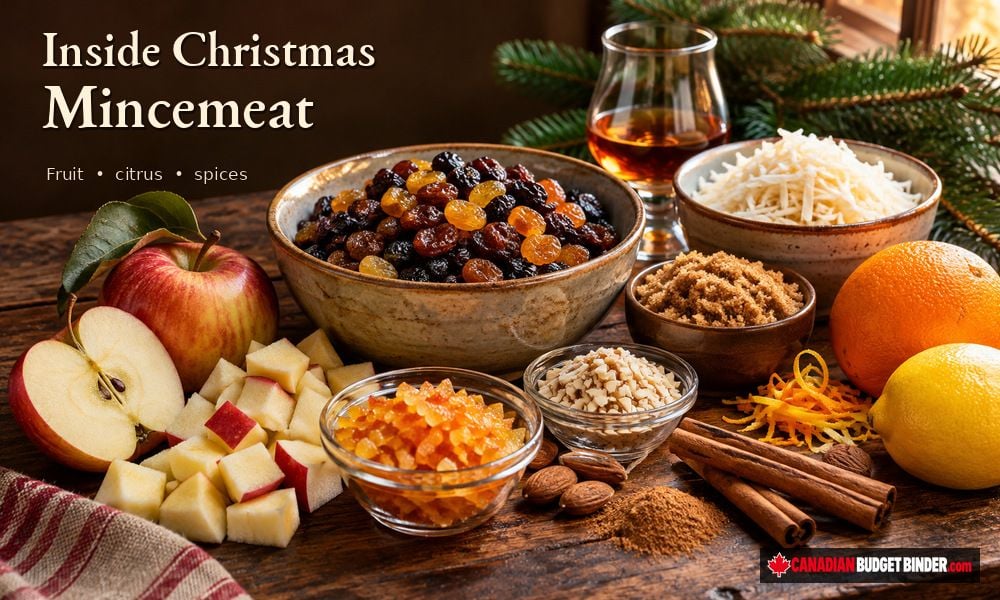
Nicola’s filling brings together the classic Christmas flavours of dried fruit, apples, citrus, almonds and warm spices. The measurements below come from her original recipe, with ounces converted to rounded grams for Canadian readers. Some old cup conversions contained typing errors, so the original weights are the clearest reference.
| Ingredient | Nicola’s original amount |
|---|---|
| Currants | 8 oz (about 227 g) |
| Sultanas (golden raisins) | 8 oz (about 227 g) |
| Seedless raisins | 1 lb (about 454 g) |
| Cooking apples, peeled, cored and chopped | 1 lb (about 454 g); original does not say whether weighed before or after peeling |
| Chopped candied citrus peel | 8 oz (about 227 g) |
| Chopped blanched almonds | 4 oz (about 113 g) |
| Shredded suet, vegetarian suet or margarine | 8 oz (about 227 g); alternatives listed by Nicola but not retested as interchangeable |
| Soft dark brown sugar | 8 oz (about 227 g) |
| Ground cinnamon | 1 teaspoon |
| Ground allspice | 1 teaspoon |
| Ground ginger | 1 teaspoon |
| Grated nutmeg | 1/2 teaspoon |
| Oranges | Grated zest and juice of 2 |
| Lemons | Grated zest and juice of 2 |
| Brandy or port | About 2/3 cup |
Allergy and dietary note: This list includes almonds, suet or substitute fat, and alcohol. Ingredient swaps may change texture and preservation characteristics; none has been safety-tested for this update.
How Nicola made her Christmas mincemeat
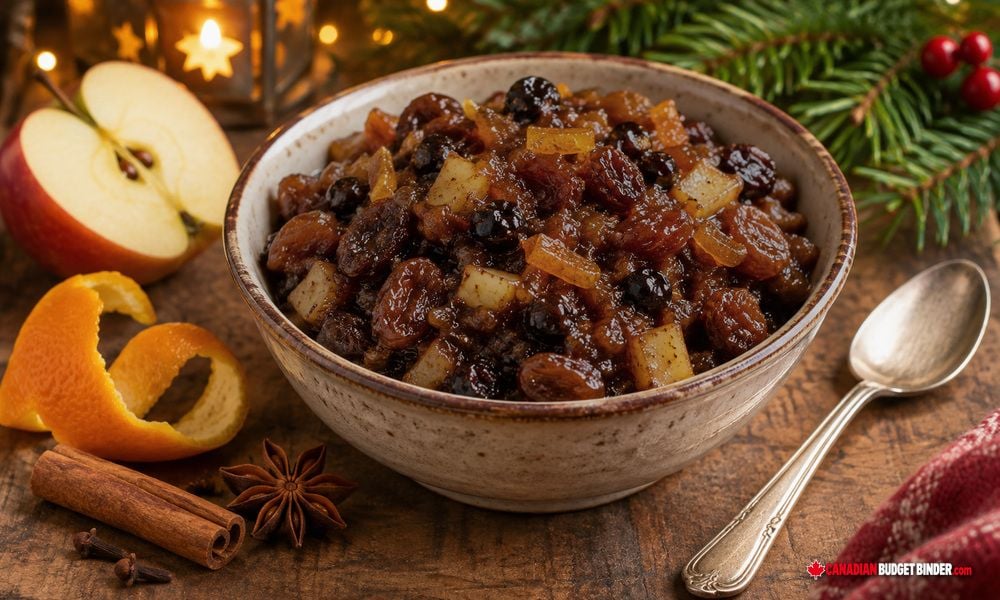
Nicola originally mixed the fruit, sugar, suet, nuts, citrus and spices in a bowl, set the mixture aside overnight, stirred in brandy or port, and packed it into sterilized jars for several weeks. Her original article describes leaving the jars for about four weeks before baking mince pies.
This is how Nicola described her family’s Christmas preparation tradition. If you’re planning to prepare filling ahead of time, the storage information at the end explains what to consider.
How much mincemeat did Nicola’s recipe make?
Nicola’s original 2013 article claimed approximately six 250 mL jars. However, the weighed ingredients add up to about 2.15 kg before citrus juice and brandy or port, so the stated jar count and volume cannot be relied upon without a real batch measurement. The updated article does not promise a yield.
Making Christmas mince pies with mincemeat filling
Nicola’s filling is the inspiration for the next part of this Scottish Christmas series: the individual pastry pies. When you’re ready to bake, follow Part 2: Nicola’s buttery double-crust mince pies. A ready-made mincemeat filling is also a convenient choice, particularly if you’d like to spend more time making the pastry.
Frequently asked questions
Does mincemeat contain ground beef?
This particular ingredient list does not call for ground beef. It does list traditional suet, which may be derived from beef fat. Most of the filling is fruit and spice.
Can I make this filling without alcohol?
Nicola used brandy or port, but there are also alcohol-free mincemeat recipes. If that’s your preference, choose a recipe developed for its own ingredients and follow its preparation and storage directions.
Can I replace suet with margarine?
Nicola’s original list includes margarine and vegetarian suet as alternatives. We have not tested whether the different fats give the same result or change the handling requirements.
Where can I find the shortcrust pastry recipe?
See Part 2: Scottish Double-Crust Mince Pies. For now, follow that article using commercially prepared filling instead of the unverified homemade maturation method.

Christmas Mincemeat
Ingredients
- 8oz/11/3 cups currants
- 8oz/1 1/3 cups sultanas (golden raisins)
- 1lb/2 2/3 cups seedless raisins
- 1lb cooking apples peeled, cored and chopped
- 8oz/1 1/3 candied citrus peel chopped
- 4oz/ 2/3 cup blanched almonds, chopped
- 8oz/1 cup shredded suet, or vegetarian suet, or margarine
- 8oz/ 1 cup soft dark brown sugar
- 1 teaspoon ground cinnamon
- 1 teaspoon ground allspice
- 1 teaspoon ground ginger
- ½ teaspoon grated nutmeg
- Grated rind and juice of 2 oranges
- Grated rind and juice of 2 lemons
- About 2/3 cup brandy or port
Instructions
Historical family method — not recommended for preparation or storage. Nicola originally mixed the ingredients except the brandy or port, rested the mixture overnight, added enough brandy or port to moisten it, and spooned it into sterilized jars for four weeks of maturation. This is preserved as a record of her family tradition, not a validated preservation method. Do not follow the overnight or four-week room-temperature storage steps. For baking, use commercially prepared mincemeat and follow its package directions.
Notes
Nicola Don's original 2013 ingredient list is preserved. The printed cup equivalents for currants and candied citrus peel contain errors or missing units; use the original 8 oz (approximately 227 g) by weight for each, not the malformed cup fractions. This is a historical recipe, not a validated shelf-stable preparation method. Do not leave the uncooked mixture at room temperature overnight or mature it in jars at room temperature for four weeks; sterilized jars and alcohol do not establish shelf stability. Use commercially prepared mincemeat for baking and follow its package instructions.
More Christmas recipes from Canadian Budget Binder
- Scottish double-crust mince pies (Part 2)
- Family holiday snowballs
- Festive coconut balls
- Festive Christmas cake
Original Scottish Christmas filling recipe and personal memories contributed by Nicola Don.
A note about preparing and storing mincemeat
Mincemeat is a lovely Christmas tradition, and families have made it in different ways for generations. Nicola’s original method included resting the mixture overnight and maturing it in jars for four weeks. Those room-temperature storage steps have not been validated for this particular mixture, so they should not be used as a home-preservation method. Sterilized jars and brandy or port alone do not establish shelf stability. For any mincemeat you plan to make ahead and store, follow a current, tested recipe and its storage instructions. If you use ready-made filling for the mince pies, follow the package directions. For more information, see Health Canada’s home-canning guidance.
Funny, I was just thinking and wondering if Mr CBB was going to run any holiday recipes and after frosting my carrot cake I popped online and look what I find here!! Is there anything non-alcoholic I could use instead of the port??? I made a. mincemeat years ago that used meat in it as well as the suet. Had to run it through the food processer to grind everything up. My late father-in-law loved it and I don’t think I have made it since he died.
I need to get into town and the Bulk store to get my candied fruit for my dark fruitcake very soon!!! I also make a lighter cherry almond cake, as well as a number of squares. Cranberry, butter tart, pineapple, and nanimo ….usually 3 kinds of nanimo squares. Original, cherry and mint. I also make a cranberry swirl coffee cake that disappears fast.
Wow, you do lots of baking Christine…. I think I put the bulk of my Christmas recipes up last year so Nicola is taking over this year. Since we don’t have any family or kids where we are we don’t really bake much these days. We hardly eat it ourselves. I’ve got some great recipes coming up from Niki and I’m sure she will chime in and advise you of any non-alcoholic suggestions she might have for the mincemeat. Cheers
I do share my baking with family and friends but you have to come here…. I don’t deliver…..
awe that’s no fair Christine.. what if i meet you half way haha?
Christine you could put in molasses (dark treacle) it has the same curing effect with a little water mix this in to give it the dollop texture you need!
Thanks Nicola, I do have some molasses that I keep on hand to use in the fruitcake…..
The things you learn, I never thought to use molasses… brilliant idea Nicola..
Just wondering if butter can be used in place of margarine? I would like to try this! We love mincemeat around here, but I usually just buy it at Superstore. They make a good one! LOL
Cant see why not! I haven’t used it before its always been suet. If you do use it let us know how it turns out:)
You can find suet in the freezer/meat section in the store. Ask the butcher at the store if you cant find it!
I’ve always been intrigued by mincemeat pie and the like, but never had the guts to make it or taste it. Maybe this year. 🙂
Go Frugal farmer be adventerous lol!
Question. This recipe reminds me of the one my mum made. She was British. My daughter married a Scottish fellow and his Dad loves mincemeat. I intend to gift him with this mincemeat. My question lol you say to just store in sterilized jars. No canning required? How long does it keep in the jars? Any info is much appreciated.
Quick question. Do you have to can the mincemeat after you put it into the sterilized jars. If so…for how long. If not your comment is to leave it for 4 weeks. It doesn’t go bad? How long does it keep in the jars. Should you freeze it? Confused lol
Hi Nadine, yes they go ito sterilized jars and they are in there for 4 weeks to let all those spices and the suet soak together. This gives it the unique taste and consistency. If you don’t use the whole jar once it’s opened keep it in the fridge a bit like homemade jam once opened. Hope this helps.
Nicky
Still confused about storing. Do you cap the jars off with canning lids and are the jars hot when filling? Just want to be safe. I am thinking the booze is what preserves it on the shelf.
Yes fill them when hot as then you will get the seal. I use ordinary jars but have used both.