


Creating a budget is not about making your life miserable or tracking every penny forever. A good budget gives your money a job, helps you plan for bills before they arrive, and makes it easier to see what you can safely spend, save, or put toward debt.
I have been budgeting for years, and one lesson has stayed the same: a budget only works when it is realistic for the household using it. You can copy someone else’s percentages or categories, but the numbers still have to fit your own income, priorities, debt, family, and cost of living.
This guide walks through how to create a budget step by step, with a practical Canadian household approach and links to free Canadian Budget Binder tools you can use along the way.
What Is a Realistic Budget?
A realistic budget is a monthly plan based on the money you actually bring home and the expenses you actually have. It should include your regular bills, everyday spending, savings goals, debt payments, and costs that do not happen every month.
The goal is not to create a “perfect” budget. The goal is to create one you can follow, review, and adjust as life changes.
If your budget says you can spend $400 on groceries but your household consistently needs $700, the answer is not to pretend the $400 number will magically work. You either need to reduce the grocery costs realistically, adjust another category, increase income, or change the budget.
How to Create a Budget in 8 Steps
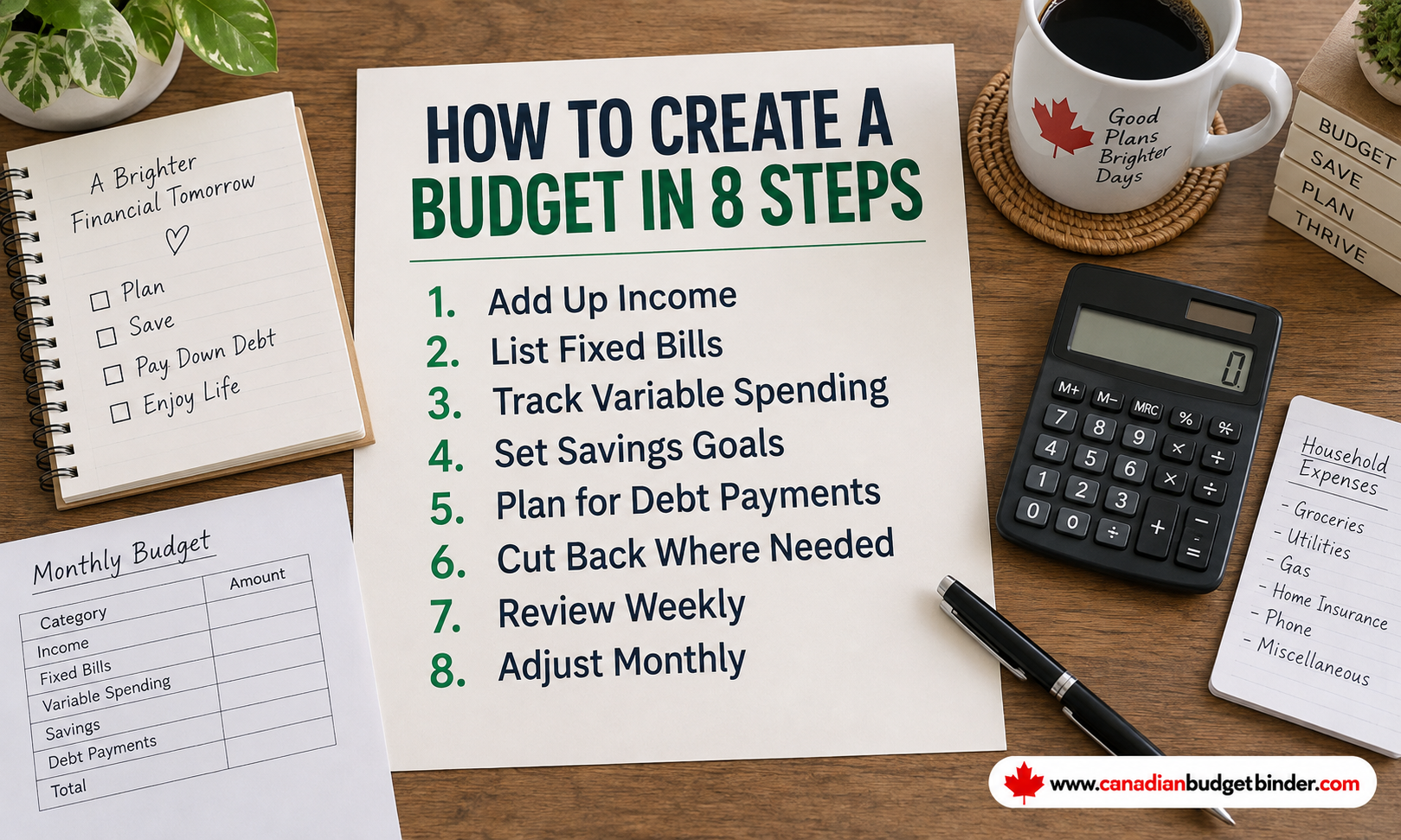
1. Calculate Your Monthly Take-Home Income
Start with the money that actually reaches your bank account after deductions. For most people, this includes employment income, pensions, benefits, child benefits, side income, or other regular income sources.
If your income changes from month to month, use a conservative amount rather than budgeting from your best month. You can also read my guide on how to budget with irregular income and expenses.
Budgeting rule: never build a monthly spending plan around more money than you reasonably expect to receive.
2. List Your Fixed Expenses
Fixed expenses are bills that are usually the same or close to the same amount each month.
- Mortgage or rent
- Property taxes or condo fees
- Insurance
- Vehicle payments
- Internet and mobile phone plans
- Childcare
- Loan payments
- Subscriptions and memberships
Some fixed costs are paid weekly, quarterly, semi-annually, or annually. Convert those into a monthly amount so they do not surprise you later.
3. Add Your Variable Expenses
Variable expenses change from month to month. These are often the easiest categories to adjust when a budget is tight.
- Groceries
- Gas and transportation
- Dining out
- Clothing
- Entertainment
- Household supplies
- Personal spending
- Pet costs
Do not guess if you already have the information. Check your bank and credit-card statements and use what you really spent over the last few months.
Groceries are a major variable expense for many households. If you are unsure what number to use, start with my guide to building a realistic grocery budget.
4. Plan for Irregular and Annual Expenses
This is one of the areas that can make a budget look fine on paper and then fall apart in real life.
Think about expenses such as:
- Vehicle repairs and licence renewals
- Property taxes
- School costs
- Christmas and gifts
- Home repairs
- Dental or medical expenses
- Annual memberships
- Travel
- Pet veterinary bills
Instead of waiting for a $600 bill and scrambling to pay it, divide the expected annual cost by 12 and set aside that amount every month. I call these projected expenses.
5. Separate Needs From Wants
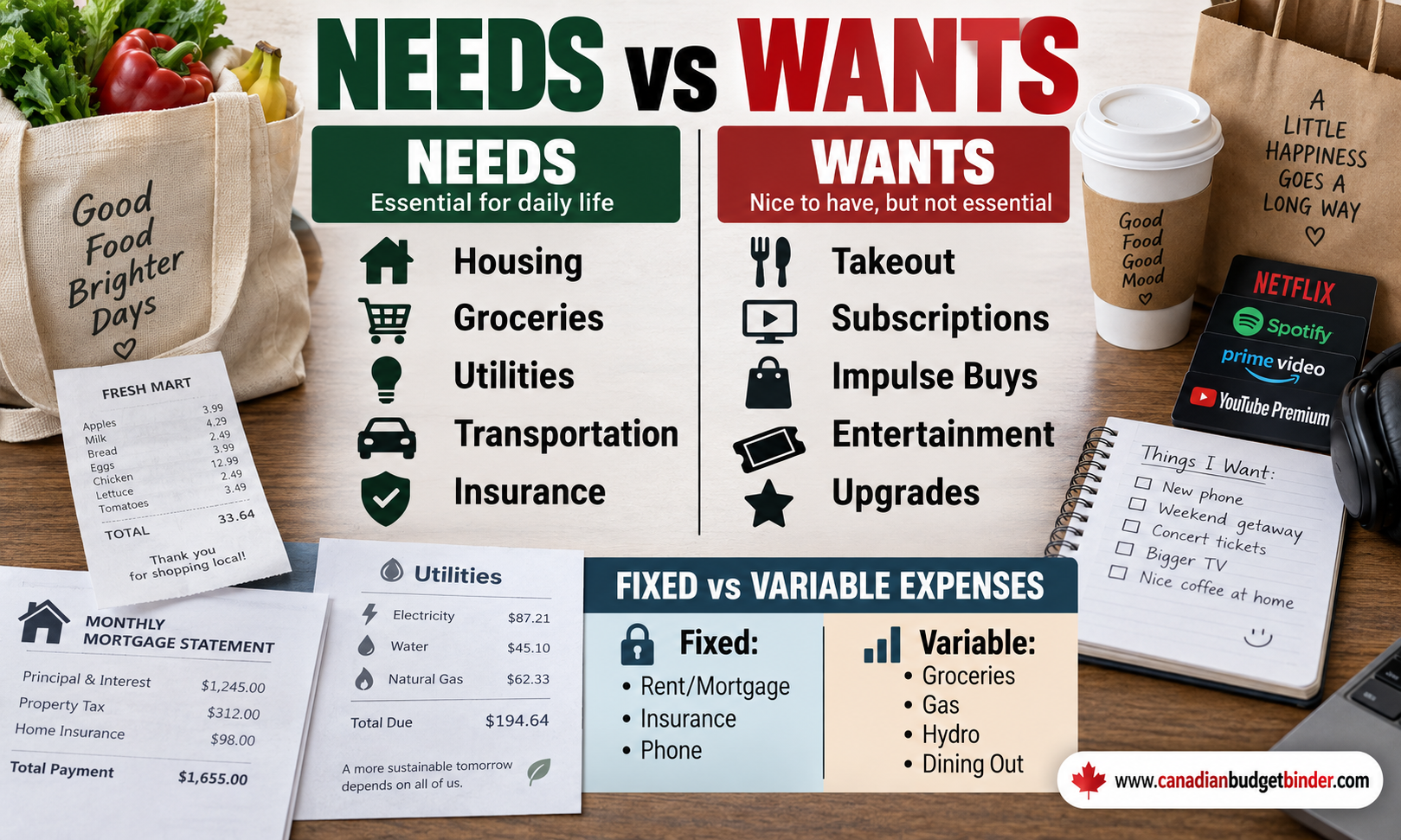
When money is tight, needs come first. Housing, basic groceries, transportation to work, utilities, insurance, healthcare, and minimum debt obligations are very different from takeout, hobbies, upgrades, or impulse purchases.
That does not mean your budget should contain nothing enjoyable. A budget that removes every bit of fun is often difficult to maintain. It means your wants need to fit after the important expenses are covered.
6. Add Savings and Debt Repayment
Savings should be part of the budget, not something you hope is left at the end of the month.
Depending on your situation, your plan might include:
- An emergency fund
- Retirement savings
- RESP contributions
- Extra mortgage payments
- Credit-card repayment
- Student-loan repayment
- Saving for a vehicle or home repair
When we were paying down our mortgage, budgeting was one of the tools that helped us stay focused. It was not the only reason we became mortgage-free, but it gave us a clear picture of where our money was going. You can read our story about becoming mortgage-free in about five years.
7. Make Sure the Numbers Balance
Now subtract all planned expenses, savings, and debt payments from your take-home income.
Income – expenses – savings – debt payments = money remaining.
If the result is negative, the budget is not finished yet. Go back through your categories and decide what can change.
Common options include reducing variable spending, cancelling or negotiating bills, delaying non-essential purchases, increasing income, or adjusting savings goals temporarily.
If there is money left over, give it a purpose. You might add it to savings, debt repayment, projected expenses, or another priority. This is the basic idea behind a zero-based budget.
8. Track What You Actually Spend
A budget is a plan. Your spending tells you what really happened.
At least once a week, compare what you planned with what you actually spent. At the end of the month, review each category and ask:
- Did we overspend?
- Did we underestimate a regular cost?
- Did an unexpected expense occur?
- Is there a category we no longer need?
- Can we increase savings or debt repayment next month?
The more often you do this, the easier budgeting becomes.
A Simple Monthly Budget Example
Here is a simplified example for a household with $4,500 in monthly take-home income.
| Budget Category | Monthly Amount |
|---|---|
| Housing and utilities | $1,650 |
| Groceries and household | $750 |
| Transportation | $550 |
| Insurance and other fixed bills | $450 |
| Debt repayment | $350 |
| Savings and projected expenses | $500 |
| Personal, entertainment and miscellaneous | $250 |
| Total | $4,500 |
This is only an example. Your numbers may look completely different, especially depending on housing costs, family size, debt, location, and income.
How Many Budget Categories Do You Need?
You do not need dozens of categories just because someone else uses them. Start with the categories that matter to your household and add more detail only when it helps you make better decisions.
If you want ideas, see my guide on how many budget categories you should have.
Some people prefer broad categories such as housing, food, transportation, savings, and lifestyle. Others want to separate groceries, restaurants, fuel, vehicle repairs, pets, clothing, gifts, and entertainment. Either approach can work.
What About the 50/30/20 Budget Rule?
The 50/30/20 rule can be a useful starting point, but it should not be treated as a rule that every household must follow. Housing costs, childcare, debt, transportation, and food can make those percentages unrealistic for some Canadians.
If you want to understand how the method works, read my guide to the 50/30/20 budgeting rule.
The best budget is the one that reflects your actual numbers and helps you make decisions you can maintain.
Common Budgeting Mistakes
- Using gross income instead of take-home pay.
- Forgetting annual or irregular expenses.
- Making grocery and personal spending numbers unrealistically low.
- Leaving savings out of the plan.
- Ignoring small recurring subscriptions.
- Never comparing the budget with actual spending.
- Giving up after one bad month.
A budget is supposed to change. If your rent increases, your income drops, you have a child, you buy a vehicle, or your grocery costs rise, update the plan.
Free Budget Tools From Canadian Budget Binder
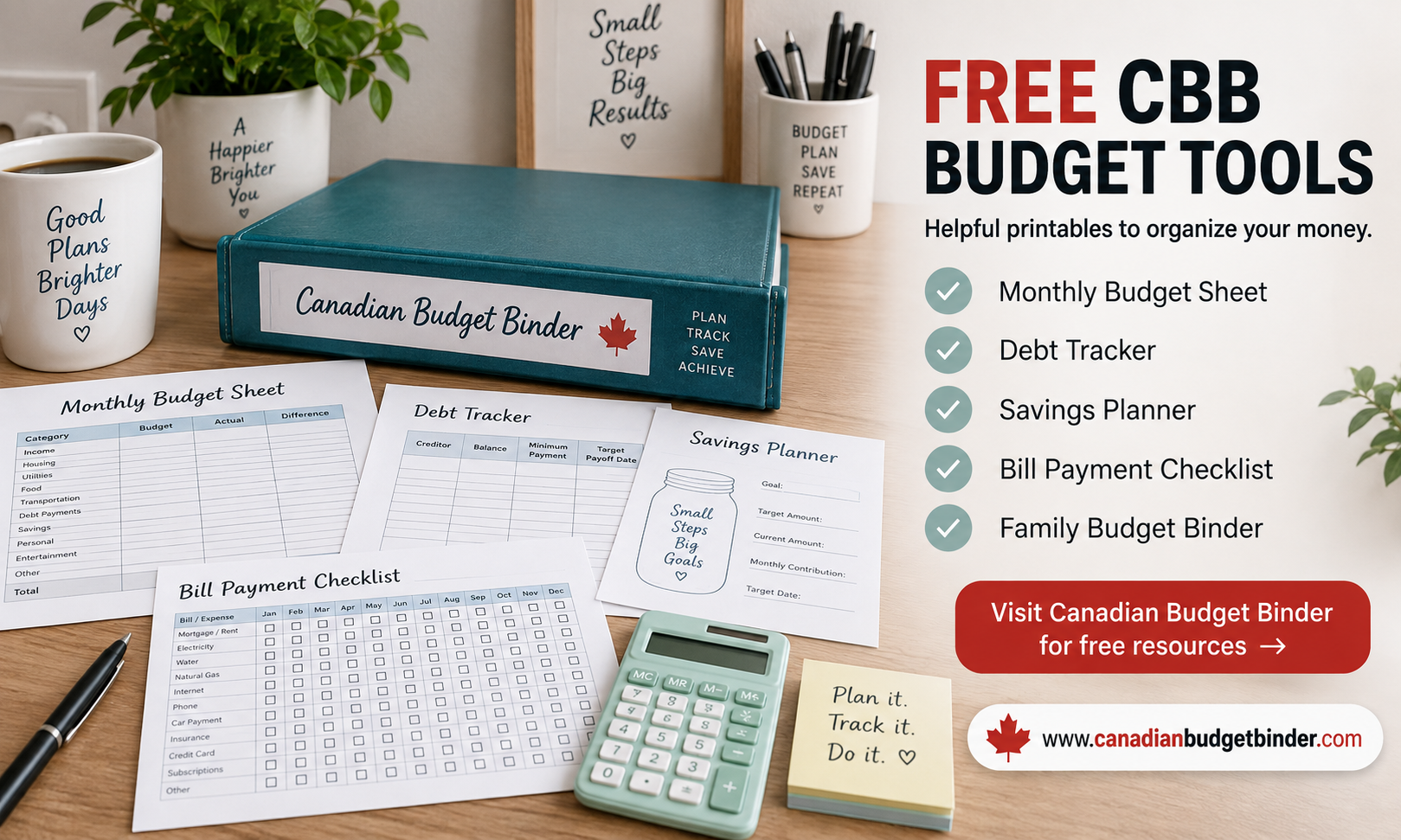
You do not have to build everything from scratch. I have created free budgeting resources based on the system we use in our own household.
Visit the Canadian Budget Binder free tools page to find budget printables and other money-management resources.
If you are completely new to budgeting, you can also work through my 10-step mini budgeting series.
Final Thoughts: Build a Budget You Can Actually Live With
Creating a budget is not about copying somebody else’s numbers. It is about understanding your own money.
Start with what you earn. Add your real bills. Plan for irregular expenses. Decide what matters most. Track what you spend. Then make changes as you learn.
Your first budget probably will not be perfect, and it does not need to be. A realistic budget becomes more useful each month because it is built from your own financial life.
Discussion: What is the hardest part of creating or sticking to a monthly budget for your household?
Mr. CBB