



Canadian dishes are as diverse as the country itself, shaped by Indigenous food traditions, French and British influences, immigration, regional ingredients, and generations of family cooking.
A plate of poutine in Québec, a Halifax donair in Nova Scotia, a peameal bacon sandwich in Ontario, or a Nanaimo bar in British Columbia can all tell a different part of Canada’s food story.
When I moved to Canada from England in 2007, many of these Canadian dishes were completely new to me. I had never eaten a butter tart or Nanaimo bar, and Montréal-style bagels were something I came to know after arriving in Canada.
Over the years, trying foods that people here grew up with became part of learning more about the country I now call home.
Some became favourites right away, while others were simply interesting because they were so different from the foods I grew up eating in England.
That’s one of the reasons I wanted to put this list together. After nearly two decades in Canada, it’s fun to look back at some of the foods I first encountered when I moved here and the regional dishes I’ve learned about along the way.
If you’re visiting Canada, new to the country, or simply want to rediscover some Canadian favourites, here are 12 must-try Canadian dishes worth putting on your list.
Canadian Dishes To Try: Poutine

Of all the Canadian dishes on this list, poutine may be the most internationally recognizable.
Traditional poutine is wonderfully simple: hot French fries topped with fresh cheese curds and gravy.
The dish originated in Québec in the late 1950s, although exactly who invented it remains disputed. Several restaurants in the Centre-du-Québec region have been credited with helping create or popularize the combination.
Regardless of who served the first plate, poutine eventually spread far beyond Québec and became one of Canada’s most recognizable comfort foods.
The cheese curds are important. Fresh curds soften when the hot gravy hits them, but shouldn’t disappear completely. That slightly springy texture—and sometimes a little squeak—is part of what makes traditional poutine different from fries covered with ordinary shredded cheese.
Today you’ll find countless variations, including pulled pork poutine, chicken poutine, smoked meat poutine, and even lobster poutine.
Those versions can be delicious, but if you’ve never eaten poutine before, try the original first.
Hot fries. Cheese curds. Gravy.
Sometimes, simple really is best.
Sweet Canadian Dishes: Butter Tarts
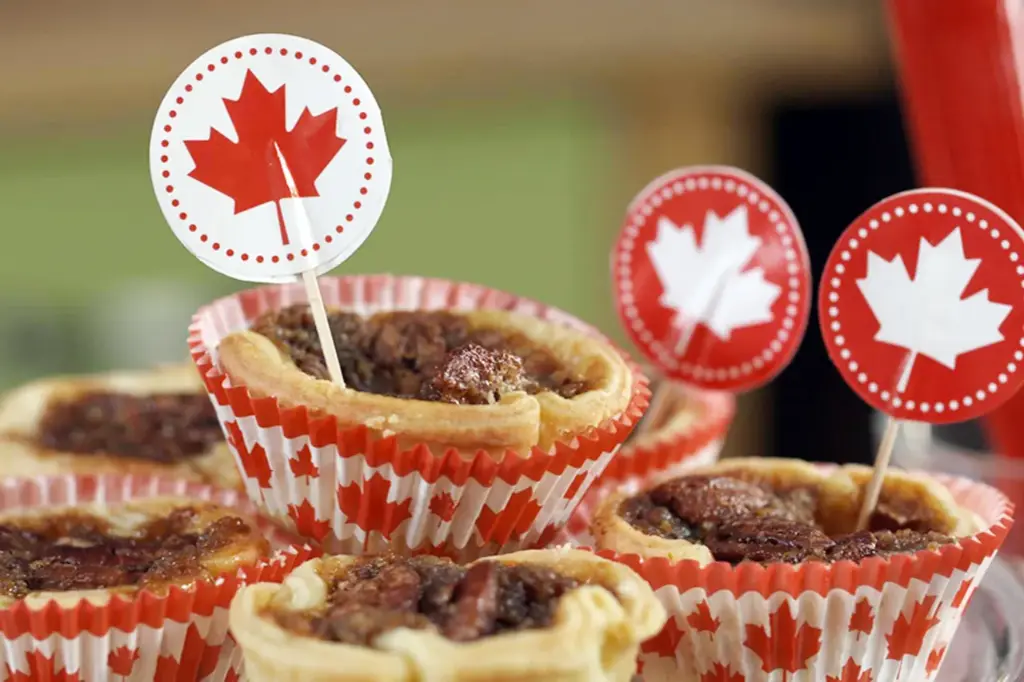
Butter tarts are one of Canada’s best-known desserts, particularly in Ontario.
A traditional butter tart starts with a small pastry shell filled with a sweet mixture, typically made with butter, sugar, and egg. Depending on the recipe, the filling may be soft and runny or firmer and almost caramel-like.
Then comes one of Canada’s great baking debates:
Raisins or no raisins?
Some butter tart lovers insist raisins belong in the filling. Others want nothing to do with them. Pecans and walnuts are also popular additions.
The exact ancestry of the butter tart is debated, with similarities to several older European pastries. What we do know is that one of the earliest known published Canadian butter tart recipes appeared in a cookbook from Barrie, Ontario, in 1900.
More than a century later, butter tarts remain a Canadian bakery staple.
For me, the best ones have flaky pastry and a filling that stays just gooey enough to make eating one slightly messy.
That’s half the fun.
Related: How To Make Homemade Keto Canadian Butter Tarts
Traditional Canadian Dishes: Tourtière
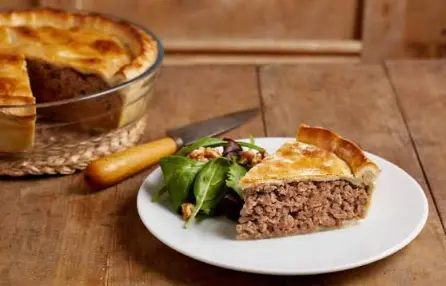
Tourtière is a traditional Canadian dish with particularly strong roots in French-Canadian culture and in Québec.
It is also closely associated with Christmas and holiday gatherings in many French-Canadian families.
There isn’t one universal tourtière recipe.
Recipes vary by region and family. Some versions use ground pork, while others combine pork with beef, veal, or other meats. Seasonings may include cloves, cinnamon, savory, thyme, nutmeg, or other spices.
Regional differences can be substantial.
In parts of Québec, tourtière is a relatively shallow pie made with ground meat. Tourtière du Lac-Saint-Jean, on the other hand, is typically a much deeper dish containing cubed meats and potatoes.
That’s one of the interesting things about traditional foods. Two families can both say they’re making authentic tourtière while producing pies that look and taste quite different.
What usually ties them together is a savoury meat filling surrounded by pastry and the connection to family tradition.
BeaverTails
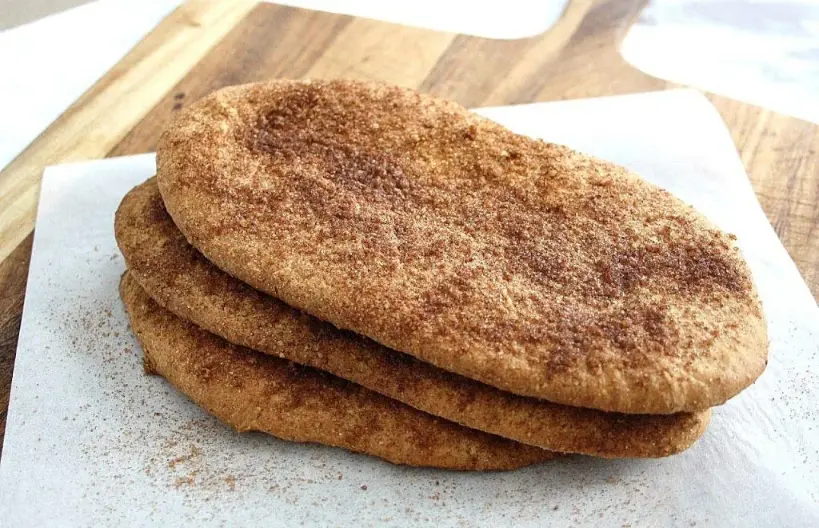
BeaverTails have become one of the more playful examples of Canadian food culture, despite the name involving no actual beavers.
The BeaverTails story began in 1978 when Grant and Pam Hooker first served the pastries to the public at the Killaloe Craft and Community Fair in Ontario’s Ottawa Valley.
BeaverTails are hand-stretched fried pastries shaped to resemble a beaver’s tail and served with sweet toppings.
They have since become a familiar Canadian treat, particularly at festivals, fairs, and tourist destinations.
The classic cinnamon-and-sugar topping is hard to beat, although you’ll find versions topped with chocolate, hazelnut spread, fruit, and other sweets.
They’re best eaten warm, with the outside still slightly crisp and the inside soft.
It’s not fancy food.
It’s fried dough covered in something delicious.
And sometimes that’s exactly what you want.
Iconic Canadian Foods: Nanaimo Bars

The Nanaimo bar is one of Canada’s most recognizable no-bake desserts.
Named after Nanaimo, British Columbia, the classic bar has three distinct layers.
The bottom is a chocolatey crumb mixture traditionally containing graham wafer crumbs, coconut, and nuts. The middle is a rich custard-flavoured butter filling. The top is a layer of chocolate.
Together, the three layers give you crunchy, creamy, and chocolatey textures in one small square.
Published versions of the dessert appeared in the early 1950s, and the City of Nanaimo later held a competition in 1986 to choose an official Nanaimo bar recipe.
Joyce Hardcastle’s winning recipe became the city’s official version.
One important thing to remember is that a Nanaimo bar isn’t simply three layers of chocolate. That crumb base and creamy custard middle are essential parts of the traditional dessert.
They’re rich, so you don’t need a massive piece.
Although that has never stopped me from going back for another one.
Related: How To Make Homemade Nanaimo Bars
Montréal-Style Bagels
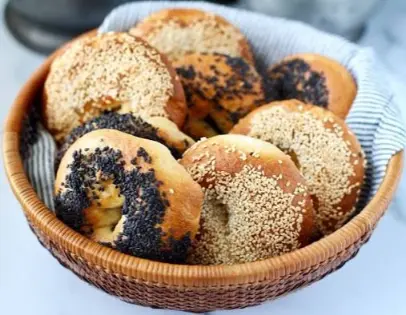
A Montréal bagel is not simply a smaller version of a New York bagel.
It has its own history, flavour and preparation method.
They’re also a good example of how immigration has helped shape Canadian cuisine.
Montréal-style bagels grew from the city’s Jewish community and the baking traditions brought by immigrants from Eastern Europe.
Traditionally, the bagels are rolled by hand, poached in honey-sweetened water, and baked in a wood-fired oven.
The result is a bagel that is generally smaller, denser and slightly sweeter than a New York-style bagel, with a chewy centre and a crisp, golden exterior.
Fairmount Bagel traces its history in Montréal to 1919, while St-Viateur Bagel is another of the city’s famous long-running bagel bakeries.
Sesame and poppy seed remain classic choices.
If you’re lucky enough to get one straight from the oven, you may not need anything on it at all.
Related: How To Make Homemade Bagels
Maple Taffy on Snow

Few Canadian treats make better use of winter than maple taffy on snow.
In Québec, you’ll often hear it called tire d’érable sur la neige.
Maple syrup is heated until it reaches the proper taffy stage and then poured in strips over clean, packed snow.
The cold snow quickly cools and thickens the hot syrup.
It’s one of those simple Canadian foods where the tradition is just as important as the ingredients.
After a short wait, you roll the maple taffy around a wooden stick and eat it while it’s still soft and chewy.
Maple taffy is particularly associated with Québec’s sugar shack season, although maple traditions extend into other parts of Eastern Canada as well.
The ingredients couldn’t be much simpler.
Maple syrup and snow.
Yet the experience of eating it outside during maple season is part of what makes it memorable.
Bannock
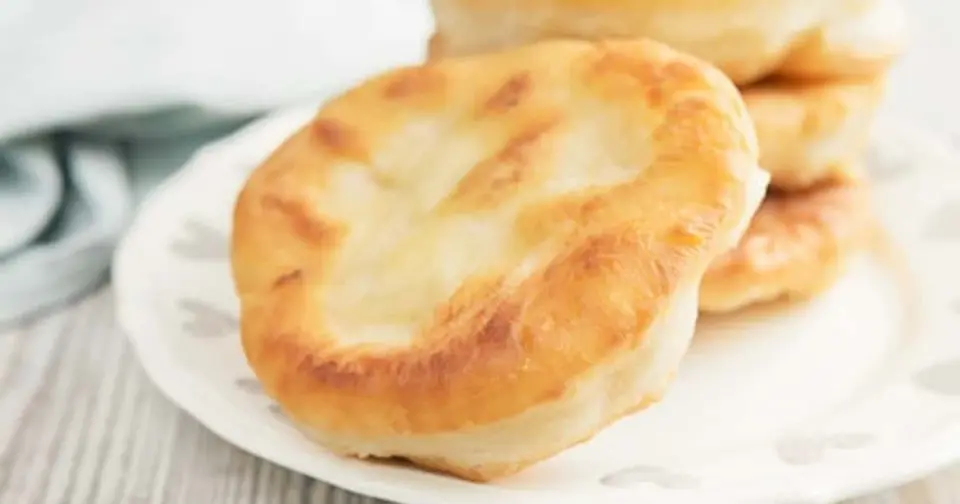
Bannock deserves a more careful explanation than it sometimes receives.
Indigenous peoples in North America made breads and bread-like foods long before European contact, using locally available ingredients such as seeds, nuts, corn, and other plants.
The wheat-flour bannock commonly recognized today has a different and complicated history.
The word bannock has Scottish roots, and flour-based bannock became connected with Canada’s fur trade. Indigenous and Métis communities adapted the ingredients and cooking methods over time, developing their own versions that became important within many communities.
Today, there is no single bannock recipe.
It may be baked, cooked over a fire, or prepared in a pan, and recipes vary between families and communities.
Modern bannock can be served simply with butter or jam, alongside soups and stews, or used as the base for savoury meals.
Understanding that history is important because Canadian food traditions are often the result of cultures meeting, adapting, and creating new traditions over generations.
Montréal Smoked Meat
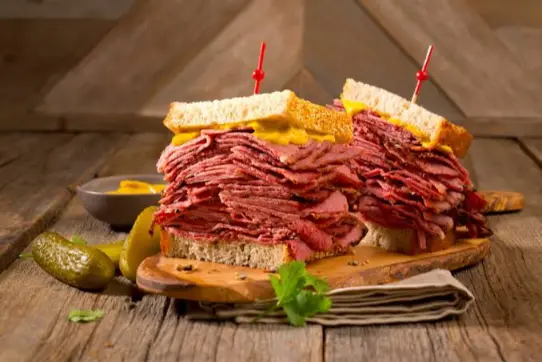
Montréal smoked meat is another food closely tied to the city’s Jewish culinary history.
It is made from beef brisket that is seasoned, cured, smoked, and then steamed until tender.
The finished meat is traditionally sliced by hand and piled onto rye bread with mustard.
A pickle on the side doesn’t hurt either.
Like several other Canadian dishes on this list, its story is closely connected to immigration and regional food culture.
Schwartz’s Deli is probably the best-known destination for Montréal smoked meat and has been serving it on Saint-Laurent Boulevard since 1928.
When the meat is good, rye bread and mustard are enough.
A proper smoked meat sandwich doesn’t need ten toppings.
Timbits

Are Timbits haute cuisine?
Definitely not.
Are they instantly recognizable to millions of Canadians?
Absolutely.
Timbits are the bite-sized doughnuts sold by Tim Hortons in flavours including chocolate glazed, sour cream glazed, birthday cake, honey dip, and old-fashioned plain.
Part of their appeal is that they’re easy to share.
Someone brings a box to work, a hockey game, a family gathering or an event, opens the lid, and everyone starts deciding which flavour they’re going after first.
They aren’t uniquely Canadian because nobody else has ever made a doughnut hole.
They may be simple, but they’ve earned a recognizable place in everyday Canadian food culture.
And yes, there is usually one flavour everyone reaches for before the others.
Peameal Bacon Sandwich

Among Ontario’s best-known Canadian foods, the peameal bacon sandwich deserves a place on the list.
Peameal bacon is made from cured pork loin rather than pork belly. Today, it is typically rolled in cornmeal before being sliced and cooked.
The name peameal comes from an earlier method of coating the cured meat with ground dried yellow peas.
One of the best-known ways to eat it is to pile it onto a soft bun, often with mustard.
The peameal bacon sandwich has become strongly associated with Toronto and its historic St. Lawrence Market.
It’s hearty, salty, and straightforward.
No complicated toppings are required.
Regional Canadian Dishes: Halifax Donair
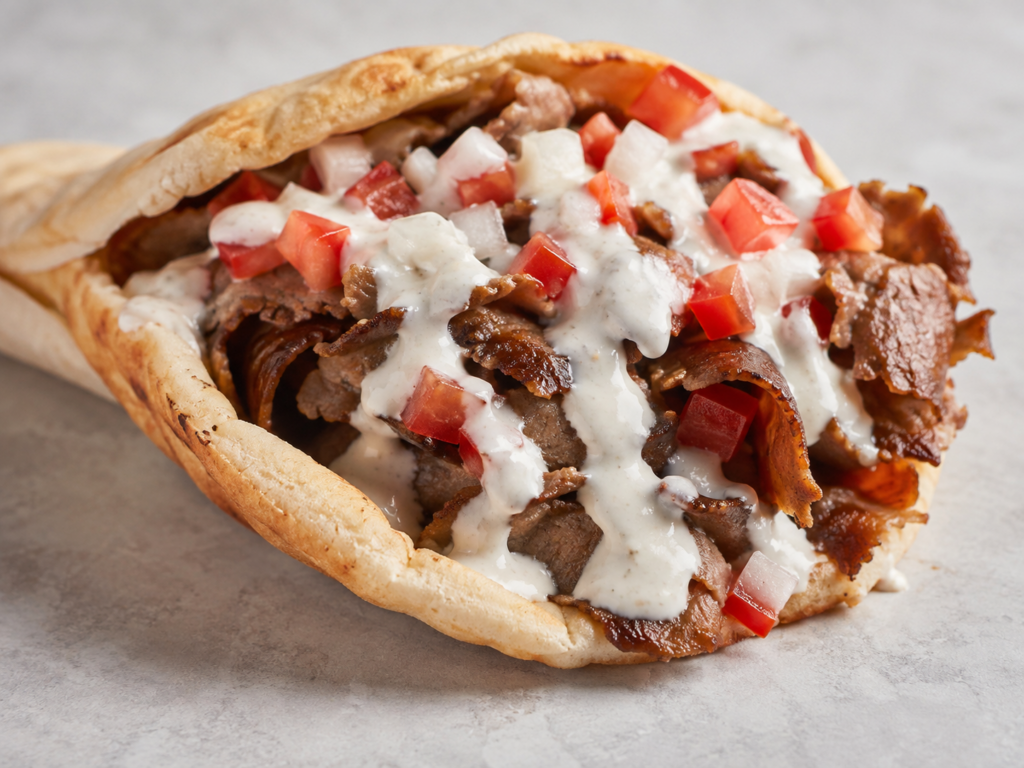
Canadian food extends well beyond Québec and Ontario, and the Halifax donair is one of Atlantic Canada’s most famous contributions.
The Halifax-style donair became popular in Nova Scotia during the 1970s and was officially recognized as Halifax’s official food in 2015.
It consists of seasoned beef cooked on a vertical spit, shaved into slices, and wrapped in a warm pita.
The traditional toppings are chopped tomato and onion.
Then comes the ingredient that makes a Halifax donair unmistakable: the sweet, garlicky donair sauce.
The combination of seasoned meat and sweet sauce may sound unusual until you try it.
It is messy, filling, and very much part of Halifax food culture.
It’s another example of how regional Canadian dishes can become closely tied to a city’s identity.
If you’re visiting Nova Scotia, put a proper Halifax donair on your list.
What Makes Canadian Dishes Unique?
Trying to define Canadian cuisine with one type of food doesn’t really work.
Canada is too large and too culturally diverse for that.
Our food traditions include Indigenous foodways that existed long before Canada became a country, French-Canadian and Acadian cooking, British influences, regional farming and fishing traditions, and foods introduced or transformed by generations of immigrants.
Geography matters too.
Coastal communities developed around seafood. Prairie cooking reflects agriculture and ingredients grown on the land. Québec has deep maple and French-Canadian food traditions. Different Indigenous nations have their own distinct foods and culinary practices.
Then some foods developed in individual cities and regions before spreading across the country.
That’s why a Halifax donair, Montréal bagel, Nanaimo bar, and Ontario butter tart can all legitimately be part of a conversation about Canadian food, even though they have very little in common with one another.
These Canadian dishes represent only a small sample of the foods and traditions found across the country.
Other Canadian foods worth exploring include pouding chômeur, tarte au sucre, split pea soup, Saskatoon berry pie, blueberry grunt, rappie pie, garlic fingers, Jiggs dinner, all-dressed chips, ketchup chips, and plenty of regional seafood dishes.
Canadian food doesn’t need to fit neatly into one category.
That’s part of what makes exploring it interesting.
Which Canadian Dishes Would You Recommend?
If someone were visiting Canada for the first time, what food would you tell them they absolutely have to try?
Would you send them for poutine, butter tarts, a Halifax donair, or something completely different?
Question: What Canadian dish or food would you add to this list?
Please leave your comments below.
Thanks for reading,
Mr. CBB