


Estimated reading time: 12 minutes
Back-to-school clothes can take a surprisingly large bite out of a family budget, especially when you add shoes, backpacks, indoor runners, jackets, and everything else children may need for September.
But does everything really have to be brand new?
Absolutely not.
One of the best ways we have saved money on back-to-school clothes over the years is by shopping second-hand.
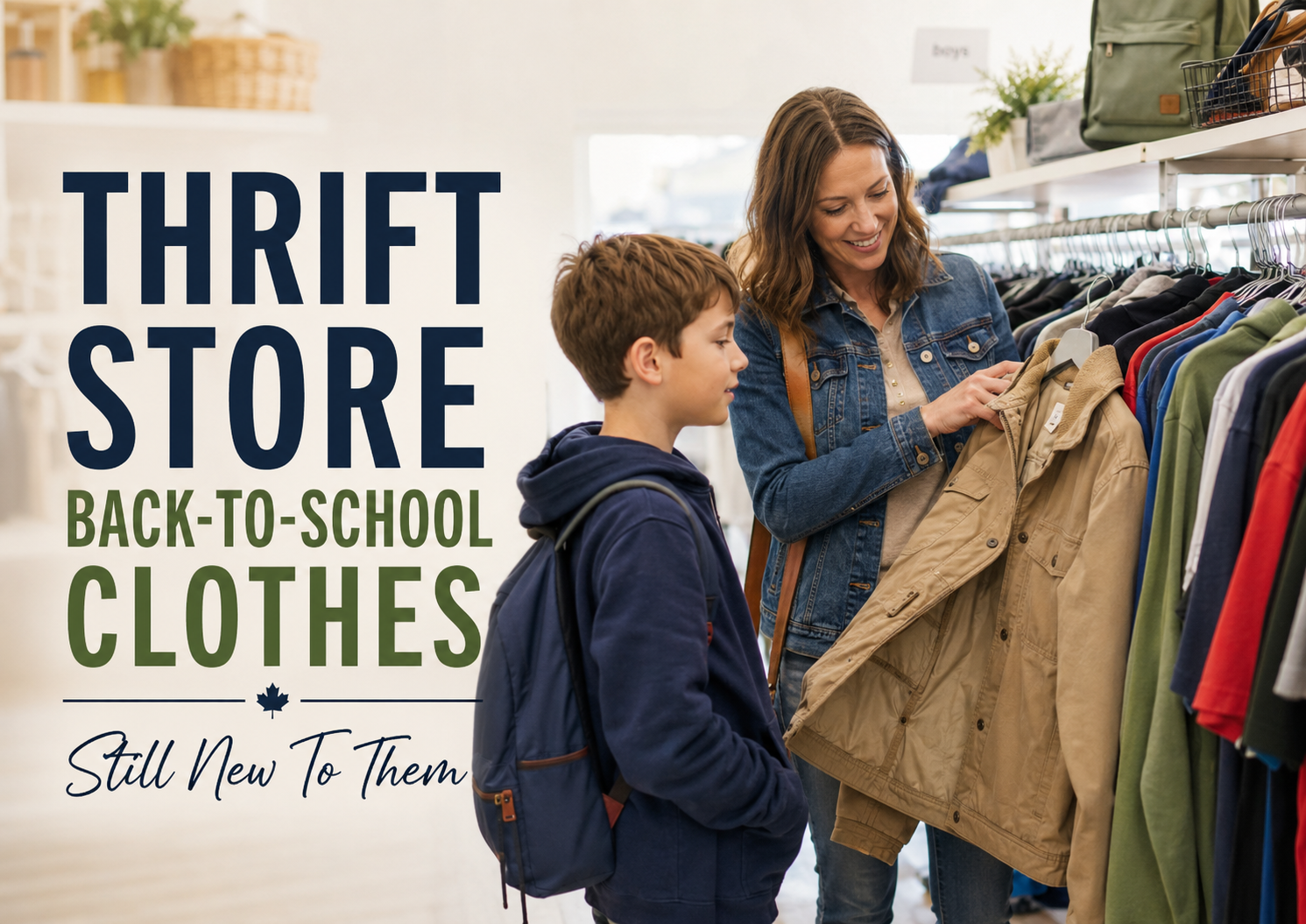
A shirt, a pair of jeans, or a hoodie might have belonged to someone else first, but if your child has never worn it before, it is still new to them.
That is something my parents taught me when I was young, and it is something Mrs. CBB and I have passed along to our son.
With the cost of raising a family already stretching household budgets, buying an entirely new wardrobe every September isn’t necessary for most children.
Before heading to the mall, take inventory of what you already own, create a back-to-school clothing budget and see what you can find second-hand.
You may be surprised by how little you actually need to buy.
Do Kids Really Need New Back-To-School Clothes Every Year?
Back-to-school advertising starts well before the first school bell rings.
Suddenly, everywhere parents look, we’re being told children need new shirts, pants, shoes, backpacks, lunch bags and the latest styles before returning to class.
The same marketing reaches our kids.
Between social media, advertising, friends and what other students are wearing, it can be easy for children to believe that going back to school means getting a new wardrobe.
That’s where parents have to separate needs from wants.
There is nothing wrong with buying new clothes when they are needed or when the budget allows.
The problem starts when we feel pressured to replace perfectly good clothing simply because September is approaching.
Before shopping for back-to-school clothes, ask:
- Does it still fit?
- Is it in good condition?
- Will my child actually wear it?
- Do we already own another one?
- Is this a need or a want?
- Can I find it second-hand?
- Can I wait for a sale?
If last year’s hoodie still fits and looks great, there is no financial reason it can’t go back to school again.
Shop Your Child’s Closet Before Shopping The Stores
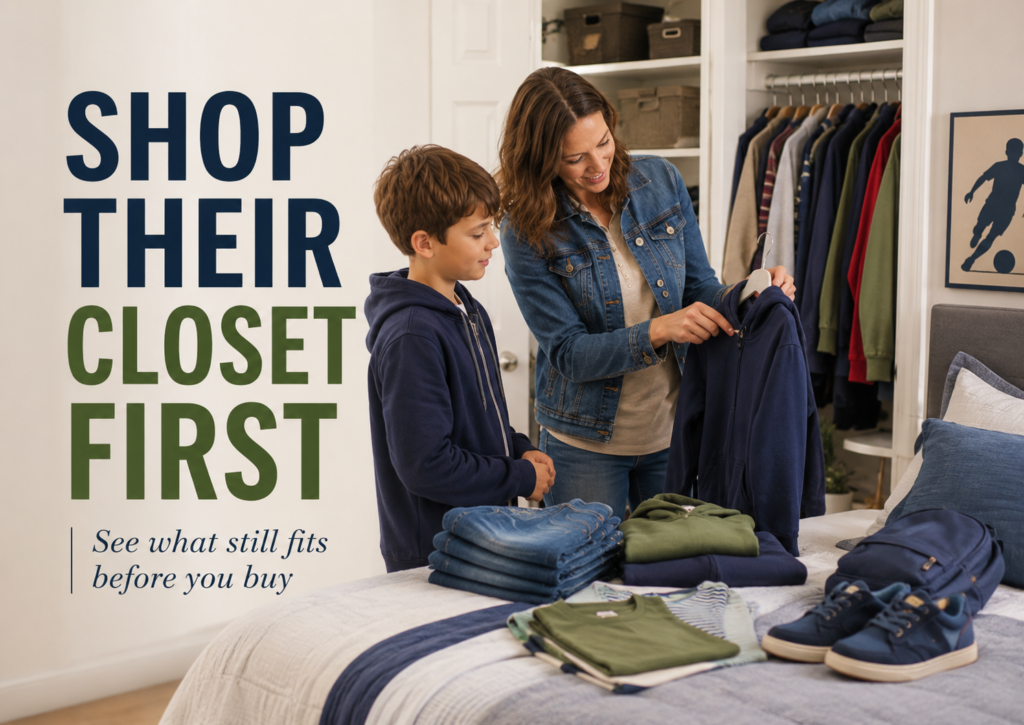
The cheapest back-to-school clothes are the ones you already own.
Before buying anything, go through your child’s wardrobe together.
Pull out everything that might work for fall and sort it into a few piles:
- Fits and will wear
- Too small
- Worn out
- Needs repairing
- Keep for a younger sibling
- Donate or sell
This gives you a much better picture of what your child actually needs.
You might discover they already have six T-shirts, three hoodies and enough jogging pants to get through the school week.
Now perhaps all you need is one pair of indoor shoes and a couple of pairs of pants.
That’s far better than walking into a store without a plan and coming home with $300 worth of clothing.
This is the same idea we use throughout our household budget: know what you have before spending money on more.
Back To School On A Budget: 15 Simple Ways Canadian Families Can Save
Create A Back-To-School Clothing Budget
Once you know what is missing, decide how much you can afford to spend.
Your back-to-school clothing budget does not have to look like anyone else’s.
Perhaps you have $75 available.
Another family may have $200.
Someone else may have almost nothing left after groceries, rent, utilities and other household bills.
Work with the money you actually have rather than what you think you are supposed to spend.
A simple back-to-school clothes list might include:
- 2 pairs of pants or jeans
- 3 to 5 T-shirts
- 1 or 2 hoodies or sweaters
- Socks
- Undergarments
- Indoor shoes
- Outdoor shoes
- Rain boots
- Fall jacket
- Winter coat
- Snow pants
- Winter boots
- Hat and mittens
Obviously, you won’t need to buy everything on this list every year.
That’s the point.
Check what still fits before replacing it.
Canadian parents also know September is only the beginning. Cold weather isn’t far behind, and winter coats, boots, snow pants and mittens can become another major expense.
Planning ahead can make a huge difference.
Thrift Store Back-To-School Clothes Are Still New
The first year our son entered junior kindergarten, his school clothes were second-hand.
We didn’t see anything wrong with that then, and I still don’t.
Children grow quickly. They stain clothing, lose things, tear knees, forget sweaters at school, and occasionally come home looking as though they’ve rolled through the playground.
Paying top dollar for every piece of school clothing never made much sense to us.
If I can find a great pair of jogging pants at a thrift store for a fraction of what they cost new, I’ll happily take the savings.
Our son may not be the first person who owned them, but they’re new to him.
That’s how I grew up thinking about second-hand purchases.
Buying used doesn’t mean settling for rubbish.
There are plenty of excellent clothes sitting on thrift-store racks that have barely been worn. Sometimes you’ll even find clothing with the original store tags still attached.
The trick is knowing what to look for.
Are Second-Hand Shops Worth Buying Clothes At?
What Back-To-School Clothes Should You Buy Second-Hand?
Many school clothing items are excellent thrift-store purchases.
I would look second-hand for:
- Jeans
- Jogging pants
- Leggings
- T-shirts
- Long-sleeved shirts
- Hoodies
- Sweaters
- Dress shirts
- Skirts
- Dresses
- Rain jackets
- Fall jackets
- Winter coats
- Snow pants
- School uniforms
Outerwear can be an especially good thrift-store find because some children outgrow winter clothing before they have much opportunity to wear it.
Always inspect everything carefully before buying.
Check:
- Knees
- Elbows
- Zippers
- Snaps
- Buttons
- Seams
- Cuffs
- Stains
- Odours
- Excessive wear
Hold clothing up to the light if necessary.
A $5 pair of pants isn’t a bargain if the knees are about to wear through.
What We Prefer To Buy New
Not everything has to come from a thrift store.
There are certain back-to-school clothing items many families prefer to buy new, including:
- Socks
- Underwear
- Some footwear
- Personal items where fit or hygiene matters
Shoes can sometimes be found in nearly new condition, particularly when a child outgrew them quickly.
However, footwear needs to fit properly.
A cheap pair of shoes that hurts your child’s feet isn’t a bargain.
The goal isn’t to buy everything used.
The goal is to decide where buying second-hand makes sense and where spending more is worthwhile.
That’s what budgeting is all about.
Thrift Stores Aren’t Always The Cheapest Option
This is important because thrift shopping has changed over the years.
Don’t assume something is a bargain simply because you’re standing in a second-hand shop.
Compare prices.
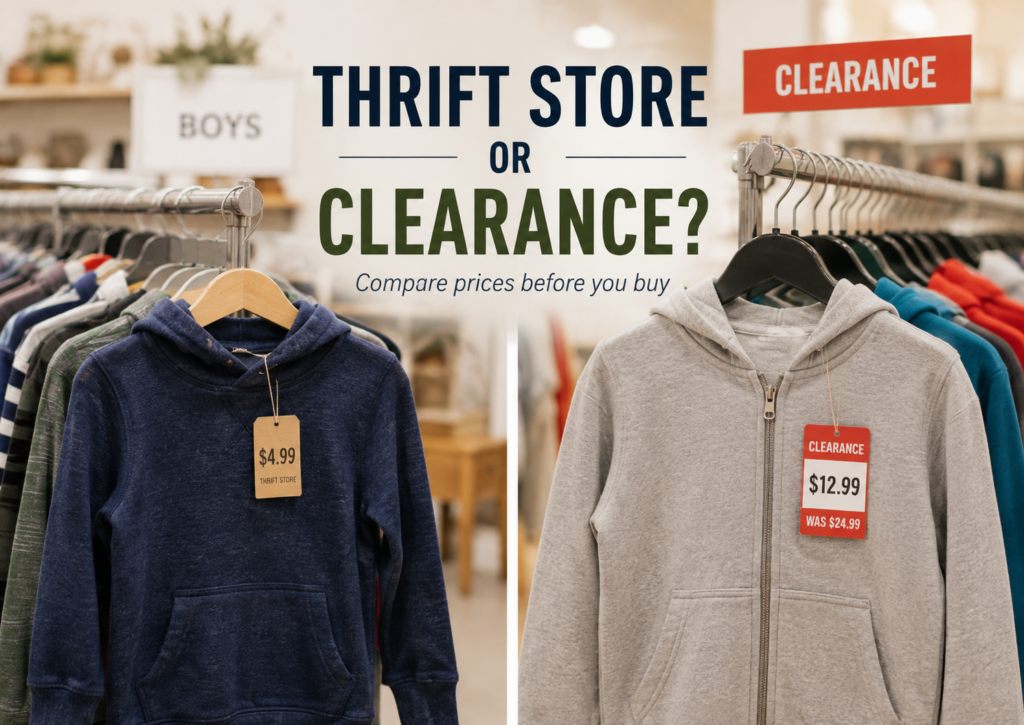
Sometimes, a clearance rack at a regular retailer can beat the thrift-store price.
If a used children’s hoodie is $15 and you can buy a new one on clearance for $12, I’d buy the new one.
Know your prices before you shop.
I learned that years ago while buying second-hand goods, and it remains one of the most important rules of thrift shopping.
We’re trying to save money, not win an award for buying everything used.
Where To Find Cheap Back-To-School Clothes
Thrift stores are only one option.
Canadian families can find affordable back-to-school clothes through:
- Thrift stores
- Consignment shops
- Facebook Marketplace
- Local Facebook buy-and-sell groups
- Buy Nothing groups
- Kijiji
- Garage sales
- Community sales
- Church sales
- Friends and family
- Hand-me-downs
- Clothing swaps
- Clearance sections
- End-of-season sales
If you have younger children, accepting hand-me-downs can save hundreds of dollars over the years.
The same goes for passing clothing along when your children outgrow it.
Children’s clothing often has plenty of life left in it.
Shop For School Clothes Throughout The Year
Waiting until the final week of August to buy everything puts unnecessary pressure on your budget.
Back-to-school clothes are a projected expense.
You know they’re coming.
The same goes for winter boots, Christmas, birthdays, vehicle maintenance, and many other predictable household expenses.
Instead of spending hundreds of dollars at once, watch for what your child will need throughout the year.
If you find next year’s winter coat heavily discounted at the end of the season and you’re reasonably confident about sizing, it may be worth buying ahead.
We did this often when our son was younger.
Buying one size up during a great clearance sale or finding something excellent at a thrift shop meant we didn’t have to pay full price later.
Just don’t go overboard.
Kids don’t always grow at the rate we expect, and tastes change.
Let Kids Help With The Back-To-School Clothes Budget
Back-to-school shopping is also a great opportunity to teach children about money.
You don’t have to turn it into a financial lecture.
Give them a realistic budget and let them help make decisions.
For example:
“We have $100 for the school clothes you need. Let’s see how far we can make it go.”
Now the child is involved.
Perhaps they really want one new name-brand hoodie.
Fine.
Show them what it costs.
If the hoodie uses half the clothing budget, what does that leave for pants, shoes, or everything else they need?
Suddenly, spending becomes more meaningful.
Children need opportunities to learn that money is limited and choices have consequences.
It’s much easier to learn that lesson with a $100 clothing budget than with a credit card years later.
Needs Vs. Wants Matter When Buying School Clothes
There will always be pressure to have certain brands, shoes, and styles.
That isn’t new.
What has changed is how often children are exposed to advertising and trends.
They don’t have to walk through a shopping mall anymore.
The shopping mall follows them around on their phone.
That makes conversations about needs and wants even more important.
Wanting a certain brand doesn’t make a child spoiled.
Adults have brands and products we prefer too.
The important part is understanding whether the family budget can afford it.
If your child wants a more expensive item, you can look for it second-hand or ask whether they want to contribute some of their own money.
There are ways to say yes without blowing the household budget.
My Experience Wearing A School Uniform In The UK
Growing up in the UK, I wore a school uniform.
We wore trousers, a blazer, a tie, and a white dress shirt.
I wasn’t particularly interested in fancy clothes or looking cool. I wanted to learn, spend time with my friends and eventually get out into the world.
My parents were also thrift shoppers.
They taught me early that something didn’t have to come directly from a store to have value.
If I had never owned it before, it was new to me.
That mindset stuck.
School uniforms can make the morning clothing decision easier, but uniforms aren’t necessarily cheap either.
Parents can still save by looking for second-hand uniforms, uniform exchanges, hand-me-downs, and school community sales.
Children often outgrow school uniforms long before the clothing itself wears out.
There’s no reason another child can’t get more use from it.
Teach Children That Second-Hand Isn’t Second Best
There used to be more stigma attached to thrift shopping.
Some people worried that others would assume they couldn’t afford new things.
I’ve never understood that.
My parents thrifted.
Mrs. CBB and I thrift.
We’ve bought clothing, household items and plenty of other things second-hand over the years.
Saving money doesn’t mean you can’t afford something.
Sometimes it simply means you don’t see a reason to pay more.
Children learn how to think about money partly by watching us.
If we treat second-hand shopping like something embarrassing, they may see it that way too.
If we treat it as normal smart shopping, that’s what they learn.
Make Back-To-School Clothes Last Longer
Saving money doesn’t stop once you’ve paid for the clothes.
Take care of what you buy.
A few simple habits can stretch your school clothing budget:
- Treat stains quickly.
- Repair small holes before they become large ones.
- Replace missing buttons.
- Follow washing instructions.
- Don’t wash clothing unnecessarily.
- Label expensive outerwear and school items.
- Keep outgrown clothing in good condition for siblings, resale or donation.
- Sell higher-value items your children have outgrown.
One child might wear a coat for one winter and outgrow it.
Another family may be thrilled to find that same coat second-hand.
Keeping clothing in circulation benefits both families.
Build Back-To-School Costs Into Your Household Budget
Back-to-school expenses shouldn’t be a financial surprise every August.
School happens every year.
Even putting aside a small amount each month can make September easier.
Your school sinking fund or projected expenses category might cover:
- School clothes
- Shoes
- School supplies
- Backpacks
- Lunch bags
- Activity fees
- Field trips
- Sports
- School photos
- Fundraisers
You don’t necessarily need a separate bank account for every expense.
You simply need a plan.
If you know approximately what you spent last year, use that as a starting point for next year’s back-to-school budget.
Free Canadian Budget Binder / Budget Printables
Save On More Than Back-To-School Clothes
Clothing is only one piece of September spending.
Parents may also need school supplies, lunch items, backpacks, transportation, and funds for extracurricular costs.
That’s why I wouldn’t look at school clothes as a separate shopping event.
Look at the entire back-to-school budget.
If you save $100 buying second-hand clothes, that $100 can stay in your bank account or help cover another school expense.
Every dollar has somewhere else it could go.
The Ultimate Back To School Savings Guide
If you have a younger child starting school, my Back To School Budget Supplies For Kindergarten guide also covers clothing, school supplies, lunch gear and other costs parents may need to plan for.
Ultimate Back To School Budget Supplies Guide For Kids
Final Thoughts: Back-To-School Clothes Don’t Have To Break The Budget
Children don’t need an entirely new wardrobe simply because the calendar says September.
Start at home.
See what still fits.
Make a list.
Set a budget.
Shop second-hand.
Accept hand-me-downs.
Compare thrift-store prices with clearance sales.
Buy new where it makes sense and used where it saves money.
Most importantly, don’t feel pressured to spend money you don’t have just because other families are shopping differently.
Our son wore second-hand back-to-school clothes, and we’ve never considered that a bad thing.
They were clothes he needed, they did the job, and they saved us money.
To him, they were still new.
And that’s good enough for me.
Discussion Question: What is the best back-to-school clothing bargain you’ve ever found at a thrift store, garage sale or online marketplace?
I’d love to hear what other Canadian families are doing to keep their back-to-school clothing costs under control.