


Have you ever stood in the grocery aisle comparing two boxes of cereal, bags of chips, or packages of cookies and wondered which one was actually the better deal?
I know I have.
Over the years, Mrs. CBB and I have learned that the largest sale tag doesn’t always mean the biggest savings. In fact, some of the best grocery deals aren’t advertised at all.
The secret is understanding one simple tool that many shoppers overlook every week.
It’s called unit pricing.
Once you know how to use it, you’ll shop with more confidence because you’ll know you’re getting the best value for your grocery budget.
Whether you’re feeding a family, shopping for one, or simply trying to stretch every grocery dollar, learning how to compare unit prices can save you money every time you head to the grocery store.
What Is Unit Pricing?
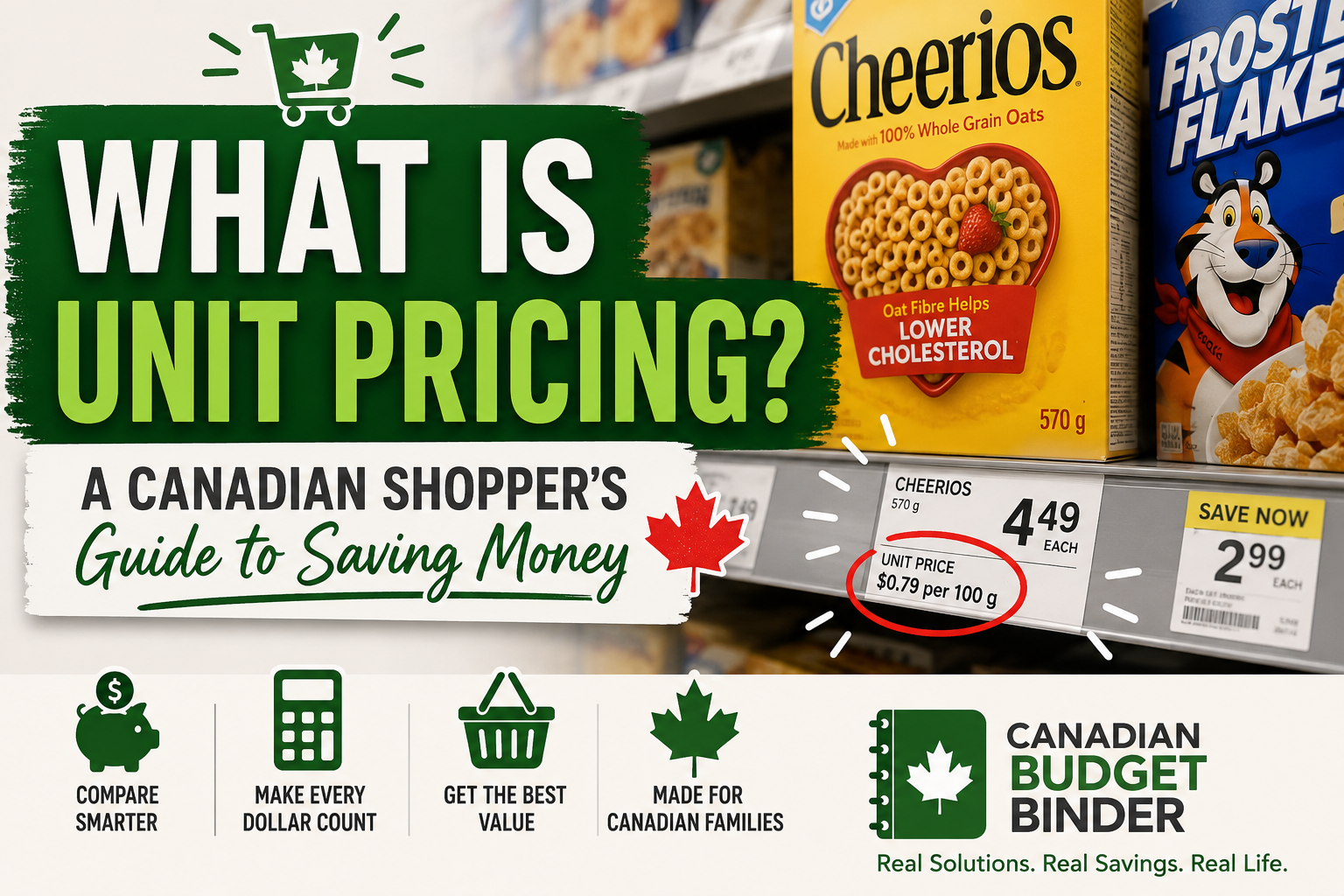
Unit pricing shows how much a product costs per standard unit, rather than just the package price.
Rather than comparing two products by their selling price, unit pricing lets you compare the actual cost per:
- 100 grams
- kilogram
- litre
- millilitre
- each item
This makes it much easier to compare products that come in different package sizes.
For example, one bag of chips may cost $3.99, while another may cost $5.49.
At first glance, the cheaper bag looks like the better deal.
However, after checking the unit price, you may discover the larger bag actually costs less per 100 grams, giving you more product for your money.
That’s why Mrs. CBB and I always compare the unit price before deciding what goes into our shopping cart.
Where Can You Find the Unit Price?
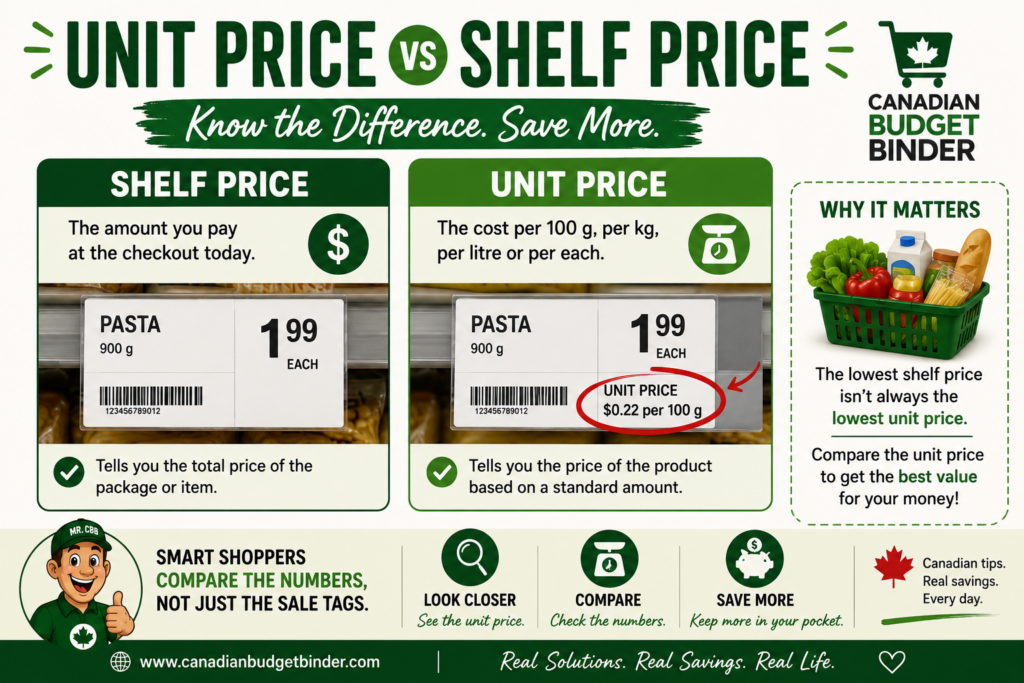
Most Canadian grocery stores display the unit price directly on the shelf tag underneath the product.
You’ll usually find:
- Product price
- Package size
- Unit price
The unit price is often printed in smaller text near the bottom of the shelf label.
Although shelf tags vary from store to store, the information is generally displayed the same way.
Once you know where to look, you’ll begin noticing unit prices almost everywhere you shop.
Why Is Unit Pricing Important?
Unit pricing removes the guesswork from grocery shopping.
Instead of assuming the lowest shelf price is the best bargain, you can compare products fairly regardless of package size.
Mrs. CBB and I use unit pricing because it helps us:
- Compare different package sizes
- Compare store brands with name brands
- Avoid paying more for less product
- Stretch our grocery budget
- Shop with confidence
The goal isn’t always to buy the cheapest product.
The goal is to buy the best value for your money.
How to Read a Unit Price
One important tip is to compare products using the same unit of measurement.
For example:
- Compare the price per 100 grams with another product priced per 100 grams.
- Compare the price per litre with another product priced per litre.
If the measurements differ, take a moment to ensure you’re comparing equivalent units before deciding which product offers the better value.
Those extra few seconds can save money over the course of a year.
How to Calculate Unit Pricing Yourself
Most grocery stores calculate the unit price for you, but occasionally you’ll find a product without one.
Fortunately, it’s simple to calculate.
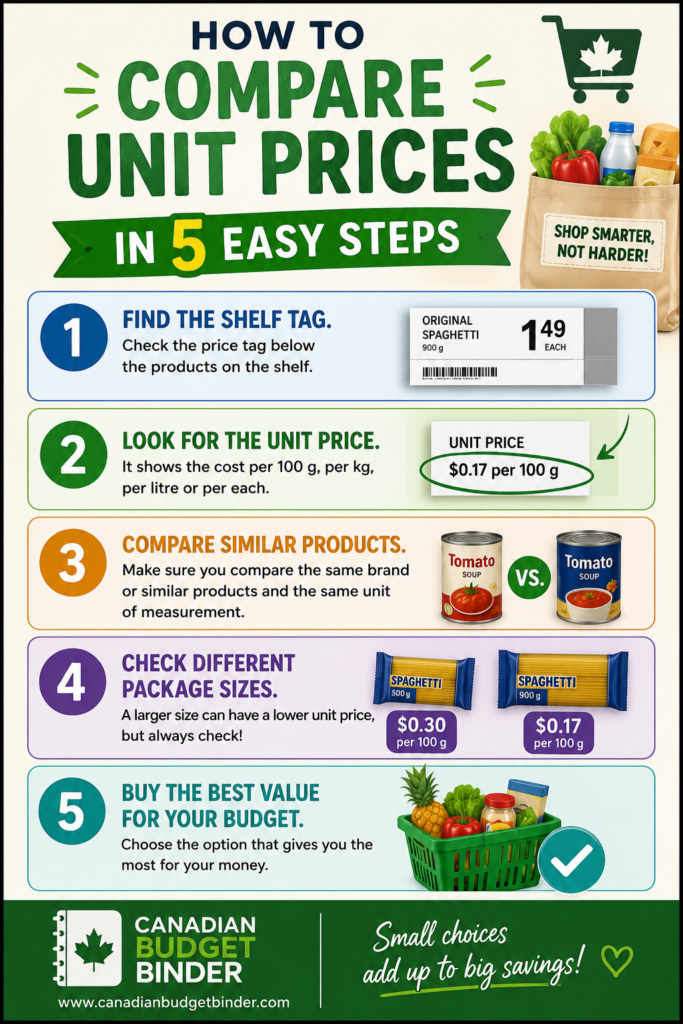
Divide the selling price by the amount in the package.
For example:
A 500-gram package costs $4.00.
$4.00 ÷ 500 grams = $0.008 per gram
Multiply that by 100.
Your unit price is:
$0.80 per 100 grams
Mrs. CBB and I rarely need to do the math because most grocery stores already provide the information.
However, understanding how unit pricing works is helpful when comparing products between stores or when a shelf tag is missing.
Compare Similar Products
One mistake many shoppers make is comparing only the sale price.
Instead, compare products that serve the same purpose.
For example:
- Two brands of peanut butter
- Two boxes of cereal
- Two bags of frozen vegetables
- Two bottles of cooking oil
Unit pricing makes it easy to see which product offers the better value, regardless of package size.
Sometimes the store brand wins.
Sometimes the name brand wins.
Sometimes the larger package wins.
The numbers tell the story.
A Real Example From My Grocery Cart
Let’s say I’m shopping for Oreo cookies.
One package is advertised for $2.99.
Another larger package costs $3.99.
Most shoppers immediately focus on the one-dollar difference.
Mrs. CBB and I do something different.
We check the unit price.
If the larger package costs less per 100 grams and we know our family will eat them before they lose their freshness, spending one extra dollar today could save money over time.
That’s exactly why unit pricing matters.
It helps us look beyond the sale tag and focus on value instead of assumptions.
🔗 Grocery Price Book: Save Money on Groceries
Slow Down and Shop Smarter
One lesson I’ve learned over the years is that rushing through the grocery store usually costs me money.
The faster I shop, the more likely I am to grab the first product I see without comparing prices.
Now I slow down.
I check the shelf tag.
I compare the unit prices.
Then I decide which product offers the best value for our family.
Those extra few seconds have saved us hundreds of dollars over the years without changing what we eat.
Sometimes saving money isn’t about clipping another coupon.
Sometimes it’s simply about paying attention.
A Real Example: Lay’s Potato Chips
Here’s another example that shows why unit pricing is so valuable.
Imagine you have two bags of Lay’s potato chips in front of you.
- Bag A costs $3.99
- Bag B costs $5.49
At first glance, Bag A looks like the better deal because it has the lower shelf price.
However, after checking the unit price, you discover the larger bag actually costs less per 100 grams.
If your family enjoys chips regularly and you know they’ll be eaten before they lose their freshness, buying the larger bag could save money over time.
On the other hand, if you’re only buying chips for a movie night, purchasing the smaller bag may be the smarter choice.
Saving money isn’t just about paying less today.
It’s about buying the amount your family will actually use.
When Bigger Isn’t Always Cheaper
One of the biggest grocery shopping myths is that larger packages always offer better value.
That’s not true.
I’ve found plenty of family-sized products that cost more per unit than the regular package.
That’s why I never assume.
I always compare.
Even warehouse clubs don’t guarantee the lowest unit price.
Buying in bulk often saves money, but not always.
A glance at the unit price can prevent you from paying more than necessary.
📷 INSERT QUOTE GRAPHIC HERE
“Don’t chase prices. Chase value.”
How Grocery Flyers and Unit Pricing Work Together
Mrs. CBB and I enjoy checking grocery flyers each week because they help us decide which stores deserve a visit.
But here’s something we’ve learned over the years.
The flyer tells us where to start looking. The unit price tells us whether we’ve found the best deal.
Just because a product is featured in a flyer doesn’t automatically make it the best value.
Sometimes another brand sitting on the same shelf offers a lower unit price.
That’s why we always compare before adding an item to our shopping cart.
🔗 How To Find The Best Price At The Grocery Store
Don’t Forget About Loss Leaders
Grocery stores often advertise popular products at very low prices to encourage customers to visit the store.
These are called loss leaders.
They’re designed to get shoppers through the door, hoping they’ll purchase other full-priced items while they’re there.
Some loss leaders are excellent bargains.
Others grab your attention.
By checking the unit price, you can quickly decide whether the advertised special is actually worth buying.
Unit Pricing and Price Matching
If your grocery store offers price matching, unit pricing becomes even more useful.
Instead of automatically matching every sale price, compare the unit prices first.
You may discover another product on the shelf that already offers better value without needing a price match.
Price matching can save money.
Combining it with unit pricing helps you shop even smarter.
🔗 Price Match at These Major Canadian Grocery Stores
Unit Pricing Goes Beyond Groceries
Although we often think about groceries, unit pricing can help you save money throughout your home.
Compare products such as:
- Laundry detergent
- Toilet paper
- Paper towels
- Shampoo
- Dish soap
- Cleaning supplies
- Pet food
Any time you’re choosing among different package sizes, unit pricing helps you compare value rather than guessing.
Once you start looking for it, you’ll notice it almost everywhere.
Common Unit Pricing Mistakes
Even experienced shoppers can make mistakes.
Here are a few I’ve learned to avoid.
- Assuming larger packages are always cheaper.
- Buying more than your family can realistically use.
- Ignoring unit prices during sales.
- Comparing products using different measurements.
- Choosing the lowest shelf price without checking the value.
Remember…
Wasting food is never a bargain.
If buying the larger package means throwing half of it away, you’ve actually spent more money.
🔗 Meal Planning or Fresh Produce on a Budget
Frequently Asked Questions About Unit Pricing
What is unit pricing?
Unit pricing shows the cost of a product based on a standard unit of measurement, such as per 100 grams, per kilogram, or per litre. It makes it easier to compare products of different sizes.
Does a larger package always have a lower unit price?
No. Larger packages often provide better value, but not always. Always compare the unit price before making your decision.
Where can I find the unit price?
Most Canadian grocery stores display the unit price on the shelf tag beneath the product price. It’s usually printed in smaller text.
Can unit pricing really save money?
Yes. Comparing unit prices helps you identify the best value, avoid overpaying, and stretch your grocery budget further.
Should I always buy the product with the lowest unit price?
Not necessarily. If your family won’t use the product before it expires, paying less per unit could still cost you more because of food waste.
Final Thoughts
Learning how to use unit pricing is one of the easiest ways to become a smarter grocery shopper.
It doesn’t require coupons.
It doesn’t require complicated budgeting.
It simply requires slowing down for a few extra seconds while you’re standing in the grocery aisle.
That’s exactly what Mrs. CBB and I have been doing for years.
Every small saving adds up over time, and understanding unit pricing helps us make better shopping decisions without sacrificing the products we enjoy.
The next time you’re grocery shopping, don’t just look at the shelf price.
Take a second look at the unit price.
You may be surprised how much money you can save over the course of a year.
For more information about per-unit pricing and how it helps consumers compare products, visit the Government of Canada’s Office of Consumer Affairs.
What About You?
Do you use unit pricing when grocery shopping, or is this a money-saving strategy you’ll start using on your next trip to the store?
I’d love to hear your favourite grocery shopping tip or how unit pricing has helped you save money. Share your thoughts in the comments below!