


Enjoy Canadian Produce And Save Money
Find out how to cope with the increasing prices of Canadian produce and the benefits of starting your own vegetable garden.
If you open any refrigerator, most people have some form of fresh produce readily available to prepare daily meals. Why? That’s easy because it’s part of a healthy diet
Have you been thinking about growing your vegetable garden? If so, now may be a good time to start, and I’ll explain why below.
If purchasing fresh produce is part of your weekly grocery budget, be prepared to see the costs increase over the next few months.
California is a major exporter of fresh produce, including grapes, melons, peppers, tomatoes, and avocados.
They are currently experiencing the worst drought they have seen in a very long time.
Canada imports approximately $5 billion worth of produce from California annually.
Most of the organic produce we see on the shelves of our grocery stores in Canada is imported, and the bulk is shipped in from California.
According to the Ontario Fruit and Vegetable Growers Association (OFVGA), to mitigate climate change and reduce the environmental footprint of fruit and vegetable production, growers need access to affordable and reliable energy sources, crop science tools to fight pests and diseases, and a stable regulatory environment that encourages competitiveness.
Impact Of US Produce On The Canadian Market
How could this impact us in Canada?
While it is uncertain exactly how much of an impact it will have, paired with the declining value of the Canadian dollar, the drought that has hit California hard this year.
It is expected to increase the cost of purchasing fresh produce in the United States and Canada.
Some predictions say that we could see an increase of 20 percent.
Buying fresh produce from a grocery store already eats up a good portion of our grocery budgets, so can you afford for it to eat up even more?
Planning your shopping trips and buying produce that is in season has always been a way to spend less on your fruits and vegetables.
Though it does limit the options available to you when you do your grocery shopping.
Importing and shipping costs can easily skyrocket the retail costs of produce compared to the cost of purchasing local food.
Shopping For Canadian Produce At The Farmer’s Market
This past weekend, I had some kid-free time to visit our local farmer’s market for fresh Canadian produce.
I have always enjoyed strolling through the various vendors to see what deals can be found while supporting local Canadian businesses and farmers.
My favourite vendors to visit are the food vendors, both the meat and fresh produce vendors.
I can always walk away feeling like I have scored a deal and have saved money in our grocery budget that can be added to my savings or used to pay down debt that month.
Canadian Produce Grower (Farmer) and Customer Interaction
It’s also nice to have the opportunity to chat directly with the farmers about their products, just in case you have questions about a specific fruit or vegetable.
This type of one-on-one conversation is something that you don’t get at a grocery store. Instead, you get an employee who works in that department.
Although they may have produced knowledge, getting any information about the food you eat from the source is valuable to many people.
Many people wish to purchase fresher produce that has spent less time in transit, and is shipped in, while it’s not only fresher, it is typically cheaper.
Unfortunately, while there is a lot of locally grown produce available in most areas due to climate requirements, locally grown produce is unavailable year-round.
While the produce may not always be local food, in many cases, it is purchased from the grower in bulk, so it can still be sold much cheaper.
My Twenty Dollar Farmer’s Market Canadian Produce Haul
On the Saturday of the Easter weekend, I sent $20.00 with my sister when she was going to our farmer’s market to buy fruit.
My $20.00 bought 4 pints of strawberries, two packages of raspberries, a bag of clementines, and a bag of green grapes.
While it was not all locally grown, if I had purchased it at the grocery store, I would have paid at least $3.99 each for premium strawberries.
Doing so would have used up almost $16.00 of the $20.00 I had budgeted immediately.
Grow Canadian Produce At Home
With the cost of produce expected to increase, there is no better time than now to start growing your garden at home.
However, if you aren’t sure about where to begin, you can read my “Garden Guide,” which will teach you about preparing your garden.
Food doesn’t get any more local than growing produce in your backyard or on your balcony.
You still have time to start your garden from seeds indoors and plan how you will plant your garden.
If you need to work on your green thumb before starting your plants from seed at home, buying plants from a greenhouse is also an option.
Retail sales for vegetable plants will start to pick up this week, so don’t wait too long to pick yours up to be able to get the selection you would like.
Think Outside Of The Box
Whether you have a small yard or an apartment balcony, there are options for you from hanging baskets to re-purposing an old hanging shoe organizer.
Even if you have a small space to garden, you can come up with some ideas that can provide a home for growing your vegetables.
Vertical gardens are becoming popular for many hobby gardeners as they often require less work to maintain and less space on your property.
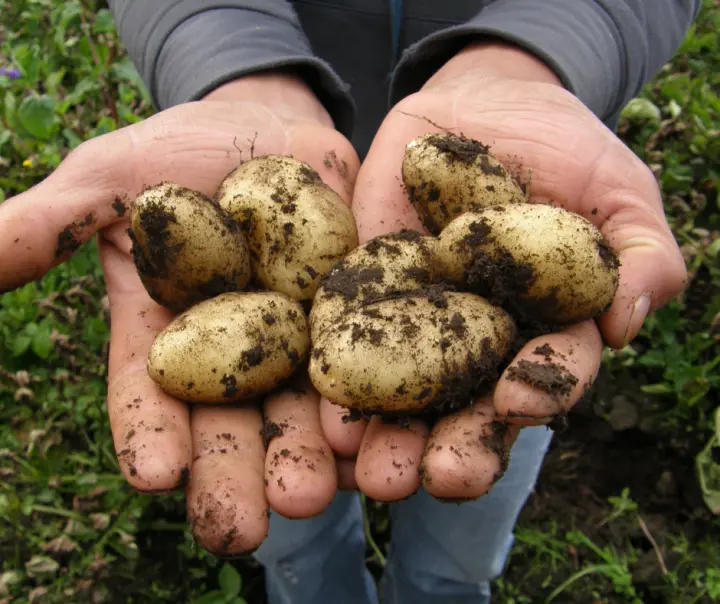
If potatoes are a vegetable you want to grow but don’t have the space, you can grow potatoes in a box like I did just last year.
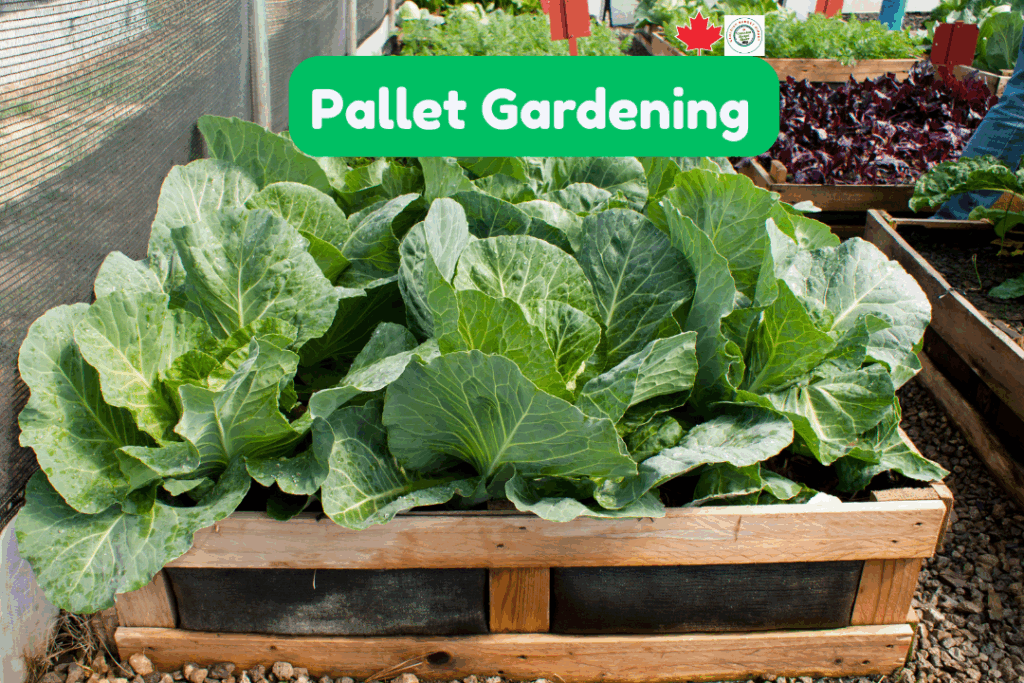
Wood pallets can be used in various ways, vertically or horizontally, to grow your vegetables with no digging required.
The pallets can be enclosed on the bottom and sides with landscape fabric stapled on all sides except the side you will be planting on.
These pallets should then be filled with a nutrient-rich potting soil and then planted with your favourite vegetables.
There are endless ideas on Pinterest for using pallets in your garden.
Take a look and see how you could incorporate one where you live.
With the growing concern of pesticide use on commercially grown produce, growing your own is the best way to control what you put into your body.
Start A Small Garden
If starting a garden and growing your vegetables seems intimidating, pick one or two vegetables you would typically purchase from the grocery store and learn how to grow them yourself.
All the information regarding an individual plant’s growing requirements and ideas on how to plant them can be found on the internet.
As you become more comfortable with gardening, gradually increase the amount of home-grown, local food you and your family enjoy.
While a vegetable garden is a valuable tool in reducing the amount of money you spend on your grocery budget, gardening is an investment of your time and money.
When gardening, you want to ensure you take the appropriate steps to care for and protect your investment.
Buying Canadian produce from your local area may be a great way to save, but remember, nothing is better than growing it in your backyard.
Canada Food Flows
You can explore Canada Food Flows to see how:
- US states supply 67 percent of Canada’s vegetable imports and 36 percent of Canada’s fruit imports
- 81 per cent of BC’s spinach, 70 per cent of BC’s lettuce, and 75 per cent of BC’s onions came from the US in 2022
- 97 per cent of BC’s avocados were imported from Mexico in 2022
- 92 percent of BC’s strawberries were imported from the US and Mexico in 2022
Canada Imports From The USA 2024
| Edible fruits, nuts, peel of citrus fruit, melons | $2.26B | 2024 |
| Edible vegetables and certain roots and tubers | $2.22B | 2024 |
Discussion: Do you prefer to buy American or Canadian produce? Where do you find the best produce deals in Canada?
Please leave your comments below.
Thanks for reading,
Mr. CBB
Related articles
- Growing a garden in a small space (canadianbudgetbinder.com)
- How to build a rock garden with weed prevention (canadianbudgetbinder.com)
- Landscaping on a Budget in Canadian Soil (canadianbudgetbinder.com)
- Sow, Grow, and Save (canadianbudgetbinder.com)
- Growing Our Frugal Garden From Seed (canadianbudgetbinder.com)
- Turning Leaves Into Compost (canadianbudgetbinder.com)
- Fall Gardening, Grow Something And Save (canadianbudgetbinder.com)
- How to create flowerbeds for your home (canadianbudgetbinder.com)
I’m not a fan of buying fresh fruits and vegetables unless they are local. ‘Fresh’ veggies and fruits in grocery stores have traveled many days and nights to get to your store. That means they were picked before fully maturity so they appear fresh and sexy by the time they get to your grocery store. There are missing nutrients because they were picked early. Frozen/canned is actually better for you even though it doesn’t seem to make sense.
I love your ideas on gardening. Starting small is a good plan. I’m always baffled when stores sell 6-packs of tomato plants. Who really wants to care for/eat dozens of tomatoes a week especially ones of the same variety?
End long-winded post. Hopefully it’s helpful to someone.
I don’t think many people realize this about fruits and veg that travel a long way to get to our grocery stores. Good points.
Here’s a good website that leads to links for farmers markets in each province. https://www.canadianfarmersmarkets.com/
Thanks for sharing that Danielle!
I can’t wait until the local farmers market opens for the season!! I’ll be looking to see what I can get there to feed us here. I also plan to see what Canadian Tire brings in. Last year I grabbed a couple of heritage tomato plants, one survived. The other was nipped off at ground level by something. We still got a few nice tomatoes there. I have some basil started from seed to plant out and some sage. Might get a green pepper plant too. We don’t have much room for growing here but I plan to try to grow what I can for us…. Oh and the younger boy saved a few pumpkin seeds last year tha the now has growing in a couple of pots to go out later.
We will be happy when it gets warm enoug to move his lime outside…it’s covered in flowers that need to be pollinated soon so he can have some more limes next winter!! His lemons tha the grew from seed are doing well too but no sign of flowers yet…
Your younger son is always growing something. Our lime is going crazy, it’s so big and yes ours is covered in flowers and very sticky. It’s just too cold right now.
He enjoys trying to grow the plants… It’s the challenge for him…. Once the plants go outside the lime can be pollinated and we will see how many fruit we end up with as you usually do lose some that drop off before getting big at all…. The first year we got one, last winter we got 8 I think it was….. He was very happy with his crop!!!
My wife would be so excited…. I do see many limes forming on the tree already so who knows. I’ll keep everyone updated on the lime progress.. you too. 🙂
In NYC, we don’t really have room for a garden, but I do grow my own spices on the windowsill which can be a really nice addition to our meals.
If there were one herb I would grow it’s likely basil as we just love it. You are right you can easily grow basil, chives, green onions etc on your windowsill.
I recently decided that this is the year that we start incorporating local trips to the Farmer’s Market into our grocery planning..
I just want to help out the local farmers, and get some fresh produce at the same time!
We will be doing the same because we might not have as big of a garden this year as I have so much going on with work, renos and other exciting things in our life. I think we may be raiding the family farmers market lol… they have massive gardens but I know what you mean.