


Safe Food Handling Can Keep You Healthy And Wealthy
Ensure your family’s well-being by prioritizing food safety in your kitchen. Learn essential tips for safe food handling.
I was thinking about food safety the other day and its importance for everyone, especially in the kitchen.
I’ve seen some shady home cooks and restaurant staff, which irks me to no end because no one wants to get sick if they aren’t practicing safe food hygiene.
Not me, nd probably not you either.
Loss of Income
What happens when you get sick?
You miss work, have a loss of income, and perhaps need someone to watch your kids or bring them to school, and the list goes on and on.
So, YES, food safety is essential for your health and may also impact your family budget.
Not everyone has sick days they can take at work where they are paid, and not everyone wants to get sick.
I could do without ever getting ill, but we know that even though we do the best we can, there’s no stopping illness.
We can prevent illness from attacking us in the kitchen with simple food safety and handling tips.
It seems like every other week, we hear about a food recall in Canada, which is scary for Canadians and makes us question whether we are doing our part with food safety at home.
Keeping Surroundings Clean and Organized
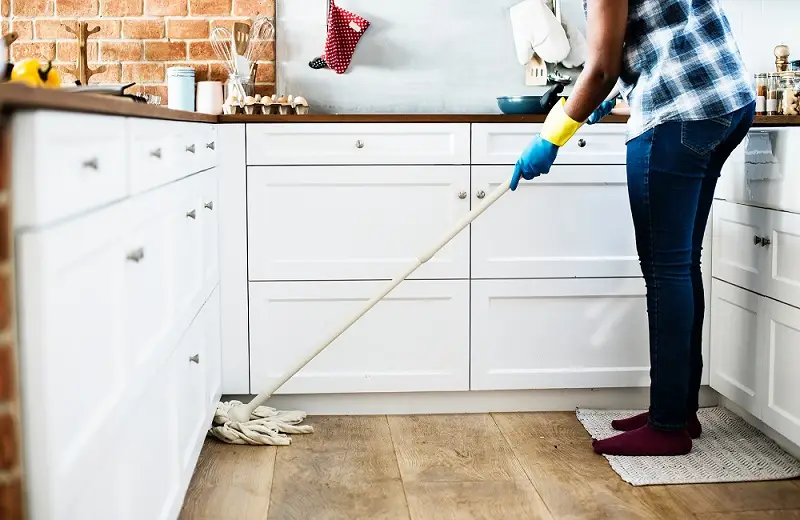
I’m probably not the best house cleaner on the block, although I don’t mind doing the laundry, vacuuming, making the bed, and dusting. Mrs. CBB is picky about the kitchen.
There’s not a day that goes by that she doesn’t sweep a few times each day because dirt manages to travel from everywhere else into the kitchen.
Call it what you wish, but she’s hard-core about cleaning and organizing, which is why the KonMari method is a big hit for both of us.
She also must mop the floor once a day because our little guy spills so much, and so do we, especially when preparing meals or when the odd coffee or tea spills. (The tea and coffee spills are mostly me, hehe)
Besides, food on the floor attracts bugs, ants, molds, and fungus if left to sit, especially items that fall behind appliances, so I pull them out once every 2 months and clean under them.
Fruit flies and other bugs can pop up if you don’t keep your kitchen clean.
Do you remember when we found the flour mites in our bottom kitchen cupboard, YUCK!
All Household Spaces Are Equally Important
Often, you may find me squirming a bit when she comes in and I’m cooking because I know I’m probably making a mess that will irk her.
I can’t keep the kitchen as tidy as she can.
Yesterday, she said, How would you like it if someone went into your garage and messed about with your tools and didn’t put them back in the right spot?
She’s got a good point there, and I don’t blame her, but I’m oblivious to what she does in the kitchen since I’m so focused on other things at work and around the house.
Besides, when she is queen of the kitchen, I get in and get out unless we create a blog recipe together.
Together always seems to work best because she supervises, and I don’t get into too much messy trouble, ha!
Healthy Eating Recommendations- Canada Food Guide
Wash Your Hands
This is one of the most important parts of safe food handling in the kitchen because our hands can hold on to so much dirt, grime, and bacteria.
A simple wash for at least 20 seconds with soap and lukewarm water, then dry with a paper towel.
This is all you need to do before cooking, after touching raw meats, eggs, and other foods that should not be cross-contaminated with each other.
If in doubt, wash your hands or wear gloves, but even then, you must change your gloves as you change what you are preparing.
When Should You Wash Your Hands?
It seems like common knowledge to understand when one should wash their hands, but it’s not.
I’m amazed at what people do with their hands and then transfer to another task without washing them.
Below are some examples of when someone should wash their hands.
- After going to the bathroom or helping others in the washroom
- Leaving the kitchen and touching surfaces
- Washing dishes
- Touching animals or anything related
- Cleaning
- Smoking
- Handling Cash or Coins
- Handling Garbage
- Sneezing, Coughing, or Blowing Your Nose
- Handling raw meats or products
- Touching anywhere on your body, including your hair
Reusable Grocery Bags
Wash your reusable bags at least once a week because you don’t know what is or was in there.
If you carry raw meat or dairy that may have leaked, you certainly don’t want them lingering on the bag, touching other products for your next grocery shop.
I take them to the basement, turn them inside out, and wash them thoroughly in the laundry sink with hot water, soap, and vinegar.
Vinegar also has plenty of uses, such as cleaning surfaces, floors, walls, windows, and produce.
Wash Fresh Fruits and Vegetables
Wash your vegetables and fruits under cool water before eating or preparing them.
I know some home cooks like to use a white-vinegar/water solution to also spray away any contaminants that may be present before refrigeration.
Make sure you remove any bacteria or dirt on the outside before cooking.
Even if you plan to peel your fruits and vegetables, always wash them because it removes any residue that may linger or spread as you peel.
Cutting Boards
How many cutting boards should you have in the kitchen?
We have three plastic and colored cutting boards and one rectangular and round wood cutting board for bread.
- meats, seafood, dairy
- products,
- fruits, and vegetables
It’s essential to sanitize your cutting boards after every use with water, bleach, white vinegar, hot water, and soap.
We do this to prevent illness and never use the cutting boards interchangeably.
Cooking Raw Meat, Poultry, and Seafood

Always cook your meat, poultry, nd chicken to safe internal temperatures to avoid foodborne illnesses.
You can read all about Safe Cooking Temperatures if you’re unsure what to test.
You can buy a meat thermometer at almost all big box stores, including Walmart and Canadian Tire, or you can order one online at Amazon.
We use the Thermopro Digital Meat Probe we bought last year for our BBQ and Kitchen.
I’m still learning my way around the grill, and it’s a great kitchen tool to have on hand.
For $25.99, you can’t go wrong with high-quality kitchen tools, and it’s worth the money.
Cleaning Kitchen Surfaces
Illness-causing bacteria survive not only on your hands but also on your utensils, food, cutting boards, and kitchen surfaces, so cleaning them daily and thoroughly is essential.
Sanitize countertops, tables, taps, sinks, and other appliances with sanitizing spray against a simple mixture mentioned below in a spray bottle.
Washing Countertops
Our countertops are always clean when no one cooks in the kitchen because Mrs. CBB ensures it.
She cleans all surfaces in the kitchen daily and does a thorough clean once a week.
We keep a labeled spray bottle that I make with 1 tsp of bleach, 1 tbsp vinegar, and the rest water, which is about 2-3 cups.
We use this cleaning solution to keep our kitchen clean and sanitized so we don’t have further risk of foodborne illness.
Cloth vs. Paper Towel
In the kitchen, we use tea towels, dish cloths, and paper towels, which all serve a different purpose. At times, we also use baby wipes to clean up small messes.
If you wear clothes, wash them often on the hot water cycle of your washing machine with a spot of bleach (whites) to kill any bacteria.
You don’t want to use the same dishcloth in your kitchen for days. Mrs. CBB uses it for a day, and it’s in the wash because she’s picky about leaving anything on the cloth overnight or for days at a time.
Although paper towels may not be environmentally friendly, you can buy many kinds of paper towels that support the environment, such as EnviroCar, Scott Paper Towel, or Seventh Generation.
Don’t forget to put your apron and oven mitts through a hot water washing cycle just as often, as food splats and other contaminants can also thrive on clothing.
Plating Dishes
Never use the same plate that raw meat, poultry, and fish have been on, no matter what. Find something else because the risk of cross-contamination increases when you do this.
No one wants to have a foodborne illness that can be avoided. Get a clean plate.
Eating Raw Foods
The choice is yours, but try not to consume foods that contain raw egg, such as cookie dough, cake batter, or egg whites.
As tempting as it might be to lick the spoon from your cake batter or cookie bowl, eating raw eggs is not safe, and you risk salmonella infection.
It may not have happened, but it could.
Eating Raw Eggs– Is it safe?
Microwave De-frosting
Whenever you use your microwave to defrost food, you must cook it immediately, especially raw meats, poultry, and seafood.
Never leave defrosted foods in your microwave or any container that you have used the microwave on, then reheat hours later.
Counter De-frosting

Almost everyone will defrost their meat, poultry, and seafood on the counter or in the sink, but beware, as you may want to stick to the 2-hour time limit.
Bottom Line: Kitchen Food Safety
It’s awareness of kitchen food safety and the steps to protect yourself and your family from becoming ill.
You need it to be in a bed or in the hospital recovering and losing income, which you need to pay your bills.
Think-Safety First!
FREE Printable: You can get the above Food Safety Tips in a PDF. The printable form is at the CBB Free Downloads Library.
Discussion: What other safe handling tips can you consider for the home kitchen?
Leave your tips and tricks in the comment section!
Great piece of information over here.
I think that Just utilize cutting sheets that can be cleaned (made of nonporous materials like glass, Formica, or plastic). Utilize separate sheets for prepared to-eat food varieties (counting food sources to be eaten crude) and for food varieties that are to be cooked, like meats.