



Estimated reading time: 9 minutes
Moving out of your parent’s house for the first time involves expenses you must know about.
Growing up, many friends would get upset with their parents, as most teens do, and tell them they were moving out.
Little did they know their emotions would be costly.
Moving Out Comes With Experiences
Mrs. CBB can remember quite a few of her friends as teens who had to leave home and collect welfare for whatever reason.
It was not easy, and the immediate costs of moving out were overwhelming and not what they expected.
When you are young, you don’t know what to expect until you live it.
There was only the telephone, in-person visits, newspapers, magazines, library books, and networking.
We didn’t have Google to find information like we do today.
That was back in the ’80s, and moving out is far more expensive today.
Consider Your Options Before Acting
If you are considering moving out for the first time, there’s much to consider.
I’m not talking about moving out to go to college or university, either.
This is where you are saying goodbye to your parents and getting a place to call your own.
Renting an apartment or even a room rental means more than just coming up with a monthly rental payment.
You need to budget for many expenses when moving out. You may want to wait until you’ve got the money saved.
Moving Out With No Money
Some of you waiting to move may not be an option, and emergency services can help you with shelter, food, and other expenses until you can get on your feet.
Even then, getting approved for Ontario Works (OW) takes time and requires specific criteria to be met.
What is Ontario Works?
Ontario Works is a service in Ontario that helps people in financial need and emergency crises and to help those looking for employment.
Financial Assistance includes:
- Income support for basic needs such as clothing and shelter
- Health benefits for the client and family
Employment Assistance includes:
- Employment workshops such as resume building
- Job-specific training
- Access to finish your education (high school or language)
- Counseling for employment
In emergencies where you have lost your home or are coming from an abusive relationship, services are available to help you.
Ontario Works Eligibility
- You must live in Ontario
- Be in financial need.
- You must be willing to look for or keep a job unless, under certain circumstances, you cannot.
Can you work while collecting Ontario Works? Yes!!
You can earn up to $200 a month without having your financial support reduced.
For every $1.00 you earn after that, Ontario Works will deduct $0.50 from the amount of money you receive from us.
You can read more about Ontario’s Online Application For Social Assistance and the different programs offered.
This is an example of Monthly Ontario Works Amounts in Toronto, Ontario.
The amounts below are only for Basic Needs, and you do NOT need an address to collect:
| Couple No children | $494 |
| One dependent adult 18 or older | $494 |
| Two children 17 years or under | $652 |
| One child 17 years or under, and 1 dependent adult 18 or older | $494 |
| Two dependent adults 18 or older | $652 |
| 2 dependent adults 18 or older | $826 |
| Single No children | $343 |
| One dependent adult 18 or older | $360 |
| Two children 17 years or under | $623 |
| One child 17 years or under, and 1 dependent adult 18 or older | $360 |
| Two dependent adults 18 or older | $623 |
| 2 dependent adults 18 or older | $781 |
You may also be eligible for shelter or board and lodging amounts but need an address.
Moving Out List Of Basic Needs
When moving out, you’ll want to have some necessities to come along with you, as not all apartments or room rentals are furnished.
The great thing about basic needs is that you can purchase them used at second-hand shops and garage sales or even obtain them for free.
Plenty of people offer free items to those in need, so if you plan on moving out, start collecting what you can ahead of time.
Saving as much money as possible before starting your moving-out journey is smart.
Moving Out Of Parents House Checklist
Below are a few examples to consider when moving out, and will vary from person to person.
You may need more than what I suggest or find that you can do without, which is perfectly fine.
- Bed, linens, and lamps (sheets, pillows, pillowcases, blankets)
- Towels, facecloths, bath mats, toilet paper, hand soap, etc.
- Clothing, Shoes, and Outerwear
- Computer, printer, or access to one for at-home resume printing *Free use at the library
- Health, Beauty, and Toiletries
- Food Items or money set aside for food when moving out. How much should my grocery budget be?
- Kitchen Utensils, Cups, Dishes, Bowls, Dish Clothes, Pots, Pans, Coffee Pot, etc.
- Cleaning Supplies include a broom, mop, dish soap, paper towel, laundry soap, floor, window, bathroom cleaner, toilet plunger, etc.
- Transportation needs (Bus pass, motorcycle, scooter, bike, vehicle, gas, vehicle insurance, and maintenance costs)
- Appliances may or may not be included in your apartment—refrigerator, stove, microwave, etc.
- Laundry may be on site for a fee, or the apartment may include a washer and dryer.
- Furniture such as a kitchen table, couch, end tables, and home decor are not considered emergency needs when moving out.
You can acquire furniture and home decor after you move.
As long as you have somewhere to sleep is all that matters.
Start early if you have the time and space to collect furnishings before moving out.
Just try to keep the furniture on a smaller scale because you don’t know the size of space you will be moving into.
If it won’t fit, you can’t take it with you and will have to sell or donate it.
Costs of Rent When Moving Out Of Parent’s House
Depending on where you live, this will dictate the prices of moving out.
I’m writing this for general awareness so you understand the basic costs of moving out and what to expect.
First off, you’ll need someone to help you move.
Hopefully, you will have friends and family willing to pitch in.
Most often, buying food and beverages is a thoughtful gesture of appreciation for your helpers.
If not, you may have to hire movers for additional expenses.
Don’t forget to move the boxes.
If you’re lucky, you can find moving boxes for free.
Often people give them away free after a move or check at the grocery store.
Oh, and then there’s the moving truck.
You’ll need a moving truck or a friend with a car if you don’t own one.
The costs to rent a moving truck in the city could run you hundreds of dollars plus gas.
Make a phone call to determine the going rates for renting a moving truck.
Understanding Rent Costs
There is no standard rent pricing as it depends on many factors beginning with the location.
Consider moving where costs are affordable.
If moving out of the province is cheaper or more opportunities are available, this may be a viable option.
For example,
We live in the Greater Toronto Area, which is expensive.
To rent a one bedroom apartment where we live, prices range from $1000-$1500 plus utilities.
Your landlord will likely want you to provide the first and last month’s rent.
So if your rent is $1000 monthly, you must give your landlord $2000 before moving in.
Credit History and Rating
If you have never checked your Canadian credit history or know your credit rating, you should probably do this before apartment hunting.
Almost all landlords will want to rent to someone with a good credit history.
This means paying your bills on time and a credit rating that is in good standing.
You will face many obstacles if your credit rating is low and you have a high debt ratio.
Related: How to order a free copy of your credit report
Includes Utilities vs. Paying For Utilities
You’re lucky if you find an apartment that includes rent and utilities.
Room rentals in a home typically include utilities unless you are moving into an apartment with a roommate.
The great thing about including utilities in the rent is that you always know what to expect for your monthly rent payment.
You must activate hydro, gas, and other essential utilities in your name when utilities are not included.
If you have never rented before or are a new utility service customer, they may require you to pay a security deposit and activation fee.
Utilities such as natural gas or electricity which requires a security deposit, won’t be hooked up until you pay the fee in full.
To better understand the fees involved, it’s best to contact the utility company directly to enquire about it.
Transportation Costs
Besides the monthly rent and utility costs, your landlord may also charge you for a parking space.
This could cost you $50 a month in some cities and, in others, hundreds of dollars.
Before moving out, consider how you will get around town and the costs.
Finally, you’ll need inexpensive tenant insurance.
Most landlords won’t even rent to you without it.
Emergency Savings
Not everyone is in a rush to move out, so if you’ve got time, use it to save as much money as possible.
I suggest having emergency savings of 3-6 months to start and build it to 12 months once you are settled in.
So, if your monthly rent, utilities, and basic needs total $2000, you’ll want to save a minimum of $6000 or 3 months’ expenses before moving out.
You don’t touch this money unless there is an emergency as it’s not for going out shopping or holiday spending.
Budgeting Before Moving Out
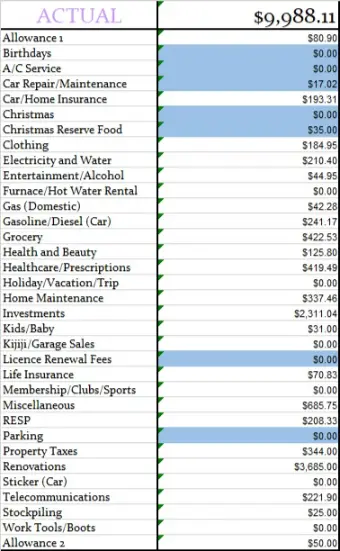
One of the most brilliant things you can do before moving out is to budget like you have moved out.
Once your emergency savings are set aside, create a monthly budget that includes all your moving-out expenses.
Related: How to use monthly budget jars
This means rent, utilities, transportation, grocery, personal needs, debts, insurance, etc.
These expenses will be based mainly on estimates.
Related: What is considered bad debt?
If you cannot balance your budget, you may want to consider waiting.
Inspect your budget and find categories to lower expenses or pay down debt first.
If renting an apartment will financially strap you, look into a room rental.
The Costs Of Moving Out vs. Saving More Money
Not everyone has parents who will allow them to stay and save money.
Remember before you get upset with your parents because they ask you to pay room and board for the costs involved when moving out.
Above are only the basics, and you can be 100% certain more expenses will come your way when moving out for the first time.
Moving out is a significant milestone, so you choose whether you want to be prepared.
Discussion: What other immediate costs can you consider when moving out of your parent’s house for the first time?
Please leave me comments below, as I enjoy your feedback.