


Estimated reading time: 5 minutes
Learn how to get out of debt and prioritize paying off creditors to achieve financial freedom. Discover effective strategies to start your journey towards debt freedom.
Creditors will come for you if you’re not paying back the money you owe them, which can get nasty.
Getting out of debt should be your priority.
The reason for this is simple: The quicker you pay off your bills, the faster you’ll have financial freedom.
While it’s a good idea to have some savings on hand, if you have many creditors to pay, it’s important to pay them off as quickly as possible.
Ways To Pay Back Creditors First
If paying creditors first is how you want to get out of debt, take the initiative to start the process.
Below are a few ways that you can accomplish working towards debt freedom.
Develop A Monthly Budget
The first step is to see where you are in terms of financial health by using a few tools.
This means either developing a budget or re-evaluating the one you have used.
Additionally, look for ways to earn extra cash with a side job, selling stuff you no longer need, or Canadian surveys, food-saving apps, etc.
Pay Back Your Creditors By Reducing Expenses
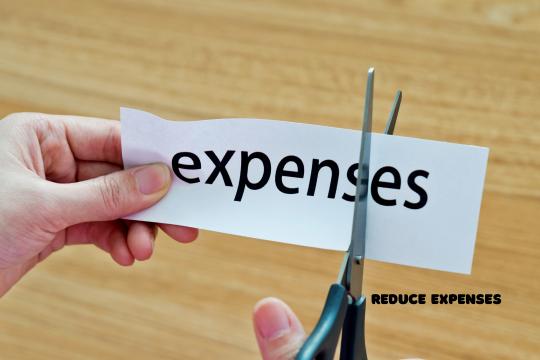
Look for ways to cut costs in your budget by using it for at least 3 months.
Below are some of the best ways to reduce your expenses.
- Ask your cable and cell phone providers for lower plans. Why I Chose Freedom Mobile As My First Provider In Canada.
- Reduce the number of times you dine out and consider meal prepping.
- Pack a lunch instead of buying it at work or on the way to work.
- Carpool to work, ride a bike, take the bus, walk, e-bike
- Hold off on expenses like clothes unless they are a necessity.
By following these five steps, it can help you save some money.
From there, you can take that additional money to manage your debts and pay off creditors .
Prioritize Paying Back Your Creditors – Snowball Plan
This is where you evaluate each lender you owe money to and develop a plan to pay them off as quickly as possible.
The most effective strategy to do this is the debt snowball repayment plan.
This is where you pay off the creditor with the smallest amount owed first while making regular payments to the rest of your lenders.
Once you pay off the first debt, you move on to the next one and continue this process until you pay off all your bills.
This is an excellent way to build momentum and help you gain the confidence to get out of debt.
Negotiate Debt With Your Creditors
If you are delinquent on an account or have a high interest rate, contacting that lender and seeing if they are willing to reduce your rate and eliminate fees is important.
In many instances, they will be happy to work with you.
If you have enough cash, see if you can make a settlement or a lump sum payment to pay off the balance.
Sometimes, the creditor may be willing to settle for less than the full amount owed.
An even better idea is to contact a debt settlement firm, which can negotiate with your creditors on your behalf.
Often, creditors settle the debt for substantially less than what you owe.
It’s important to receive this agreement in writing.
Furthermore, you may have to pay taxes if the debt they forgive is more than $600.
Lastly, this will hurt your credit score, but it will help you get out of debt, and that’s the goal.
One of the best reasons tackling debt is so important is that it helps you develop sound financial behaviors.
When you do this, you find ways to adjust your lifestyle to fit your budget.
Saving Money After Debt Is Paid
This means once you pay off your creditors, you can take that additional money you save monthly and place it into a high-interest savings account.
We use both Simplii Financial and Tangerine Bank for our savings accounts because they are two of the best in Canada.
As a result, even after paying your bills, you will see the benefits of changing your habits.
Ultimately, while it is a good practice to save, paying off your bills is often more important.
By developing a budget and making some sacrifices, you can free up some cash to pay your creditors.
Furthermore, by assessing your situation and determining the best course of action, you are taking steps that will result in a debt-free future.
Contribution By: Jeffery Sterner is a blogger with Debt.org, an organization that helps consumers prevent and get out of debt.
Great article Mr. CBB! I did a dual prong approach. I did have the typical $1000 in savings for emergencies when I started to pay off my credit cards, but when I did I still put money into my savings. It was like 90/10 between credit card payments and savings. I did this so I wouldn’t be so far behind when I got done.
I would have a cushion as well if I was in that position.
Good tips, many of which we do now that we live by a budget. I would add though, that even if you’re in debt you still need to have at least $500 or $1000 saved some how. I know this might be counter-intuitive, but having that as a backup will help in the large majority of emergencies and can help avoid further debt. I would also add that attacking the card with the highest rate is just as effective as the snowball method in many cases. You can potentially save a good chunk of money by knocking out the highest rate card first. Ultimately, having that mindset to get rid of debt is vital and should be aided with the implementation of a budget.
Negotiating debt is something people are afraid to do, or just assume can’t be done, it is actually super easy and companies prefer that rather than chasing you for years or having you filing for bankruptcy.
Companies figure they might as well get what they can get so if they can negotiate something that will work they will do it. It’s up to the consumer to say, “listen, I’m going to go bankrupt” or whatever the case and if you want some money please work with me to come up with a solution that works for both of us.
I definitely agree that paying off your debt before savings should be the priority! Unless you can find me a place where my savings will pay me 20% return. 🙂 Unfortunately, I find some of my clients so used to making the monthly payments that they would rather put some money aside to build a savings cushion and/or contribute to an RRSP to get the tax refund instead. This doesn’t make sense from a numbers standpoint, but emotions usually win out!
As long as the money is working for them. I agree that we should have a cushion, I would. I also agree with paying off debt as fast as they can especially with high interest rates. I’m not talking about mortgages I’m talking consumer debt. Balance is key, for me at least! Thanks Vicky
Sadly there’s no negotiating with student loans. . . so they are next on our list of things to attack. The credit debt is gone, the cars are paid off, and the 8-month emergency fund is just $850 shy of where we’d like it to be.
Good for you!! Student Loans although not bad loans can add up and cost a fortune if not paid. Keep at it you will get there Dee!
There isn’t really room in the budget for it right now, but I’d love to build up some sizable savings. We now have 2 medical loans to pay for hospital services not covered by our insurance. We are talking about $6000 in debt just because we didn’t have enough of an emergency fund.
I agree a savings fund should be part of the budget and always waiting for that emergency that will pop up.
I think it depends on the return. I have a really low interest rate on the remaining balance of my student loan and when I calculated how much I would “save” in interest by cutting my savings this year, it was so negligible that I just stuck with my current plan. But I think that’s because I’m already paying quite a bit back.
Great Post!! It winds me up when i hear about people putting money in a 3% interest account each month while they have £1000s on credit cards at 20% APR!!
Loved the article……. this is a lot more info than we have ever gotten from our bank…. which is why we are thinking of changing banks. Our daughter went to a different bank than we use as the husband of a co-worker was loans officer…. he was the first one to sit down and try to work something out budget wise for her. Something neither she nor we had received from our currant bank….
Sometimes it’s worth it to get second opinions and to do research.
Loving the tips
I always pack my own lunch and car pool to work. I’m not sure how much it saves me, but it has to be something.
Oh mate I’m betting it saves you a pretty penny. I remember mates back home would buy lunch and dinner including snacks every day at work.. it was crazy.
I just paid off a high interest credit card. whoo hoo! 1200 to go on a current zero interest card. Trying to get that paid off before there is interest.
I have a little over $1000 in debt on a zero interest home depot card for some carpet I put in a home a recently sold. That’s all the debt I have and that will be paid off soon. That will change soon as I just bought a new home today. So much for being debt-free!
That’s awesome mate! Congrats. I guess we should look forward to plenty of blog posts about your new home!!!
Debt payoff is the goal for this year,so I am in total agreement.
Good guest post. I like the advice to prioritize your creditors. When I was a practicing advisor, I’d often have people come in to meet who were paying all the wrong people first while the important stuff was only getting worse.
Good guest post. I like the advice to prioritize your creditors. When I was a practicing advisor, I’d often have people come in to meet who were paying all the wrong people first while the important stuff was only getting worse.
Good points. It does not make much sense to start a savings account when there are credit cards due with interest accruing. Just the same, if one does not set aside some money for emergencies, the credit card will have to be used and it becomes a viscous cycle.
The best thing is a budget, and then saying no to a lot of spending.