


Estimated reading time: 13 minutes
A personal contingency plan reduces panic, stress, and confusion while committing you to a better place than those who leave their finances to chance.
Know Your Options Ahead Of An Emergency That Can Change Your Life
What does that mean for you and me?
It’s the difference between $1 with a plan to get more when needed and having no money or resources.
When Mrs. CBB finally decided to buy our home, we didn’t know it then, but we had created a financial contingency plan, just in case.
We bought our first home together on one income because it was more critical for us to plan for unforeseen events.
Our theory was that an ounce of prevention was better than fighting a financial battle we may lose.
We would review our plan yearly to make sure it made sense to us according to our situation.
I’m unsure if we just had our frugal mindset on Green-Light-Go, but we sat down and created emergency scenarios.
By this, I mean,
- Could we keep our home running on one income? If yes, who’s income?
- What will do for money if one of us gets injured or has a health problem?
- When was the last time we reviewed our retirement portfolio?
- How can we earn more money while still working full-time?
- What ways could we chop our budget and still get by?
- How much would a basic grocery budget cost us approximately every month?
- What happens if we need to postpone retirement?
Postponing retirement has become a new reality for many older workers in the wake of the market crash, underlining the need for reform of the rules around retirement saving in tax-deferred programs.
Contingency Plan For Those Left Behind
We are still considering the above and more, but we think about our son most of all.
What happens if one or both of us become infected with the virus and are hospitalized or, even worse, die?
- Who will look after our son if we are not here to care for him?
- Do we have a legal will? (Yes, we do, now)
- Are all of our financial documents up to date?
- Does my spouse or power of attorney know how to access everything they need if I die or become ill?
This almost gives me the chills to think about it, but we are in no position anywhere worldwide to think that we can otherwise hide.
Related:
- Widow Left With No Money After Bank Freezes Account When Spouse Dies
- What happens to your TFSA if you were to die?
What is a contingency plan?
A contingency plan is often used for businesses and governments where they create a backup plan just in emergencies.
For example, once this C-19 virus has passed, the government will likely have a contingency plan if an outbreak happens again.
I’m sure they had something on paper, but you never know the extent of a situation until you are living it; however, putting something in place is better than nothing.
A contingency plan may include multiple situations that could occur and shift over time.
- Can we live on one income?
- How to stretch our food budget?
- Do we have emergency savings?
- How will we support ourselves during a financial waiting period? Ex: Employment Insurance, WSIB, Long-term or Short-term insurance – disability.
The idea is to be prepared for the worst so you aren’t facing disaster not knowing what to do.
I know this sounds like a tough pill to swallow, but unless you consider all the possibilities, you may be scrambling for help.
Business Contingency Plan
From a small business standpoint, a contingency plan may incorporate savings if you cannot run your business but still need to pay the bills or employees.
Running a blog is an online business that many people rely on for full-time income because, at the time, money was coming in strong.
I do not, however, but I still need income to fund this blog, and a sudden drop in traffic also requires a backup plan.
Do you know all those ads you might hate or have to scroll to the bottom for a recipe?
That’s income for your favorite bloggers, which helps them earn a living while working from home.
Imagine earning a living and having to do something that didn’t sit well with all customers.
If they stopped coming back, you’d lose money; however, you can’t please them all because the bills need to be paid.
Recognizing why and how businesses earn a living may help you understand how to support them better.
Financing Your Business To The Max
We know a couple running a dining restaurant levered with a second mortgage on their home.
It was the only way for them to open their dream restaurant and, I guess, ‘hope for the best.’
They employ 4 minimum-wage staff, including themselves, to help with take-out, and are stressed to the max.
- Is it worth it for them to stay open?
- Can they pay their employees and bills, or are they just breaking even?
- Will there be any support from the government? If so, what and when?
There are many unknown situations to consider, and another reason you should NEVER open a business without a contingency plan.
Financing your home or borrowing money for a business that could tank puts you in a rough, high-risk financial position.
Even though there may be promised government assistance ALWAYS create a contingency plan where you rely on yourself, FIRST.
Related: Businesses Plead for Relief as Pandemic Halts Cash Flow
Businesses are pushing for a broad freeze on payments to government and a ramp-up in wage subsidies as part of a more aggressive approach to safeguarding cash flow and avoiding cascading mass layoffs.
Look After Your Staff
Loblaws Canada, for example, announced they would pay their front-line employees working through the 2020 world virus epidemic an extra $2.00 an hour.
On the other hand, Sobeys created a “Hero Pay Program” for its employees working through the pandemic across Canada.
Sobeys says all staff members will receive an additional $50 a week, regardless of the number of hours worked.
In addition to the extra $50, staff who have worked more than 20 hours a week will receive an additional $2 premium per hour for all hours over 20 hours.
I guess these contingency plans that the companies offer to keep and praise their staff were not part of their plan.
Often in the wake of something catastrophic, your contingency plan shifts, meaning you have to override or change it.
You can’t always predict what will happen in the future.
However, you must brainstorm possibilities and consider them part of your plan.
Again, I’m sure moving forward, businesses knowing what they know today will create a contingency plan for the future.
- How will I pay the bills if my customer base is low?
- Can I afford a rent increase for my business?
- What will happen in the event my business is closed temporarily?
- What other ways can my business earn income?
Unlike the current C-19 situation, where the government is stepping in to help businesses, this may not always be true.
Just like a business, our personal lives center around the same ideals, especially regarding savings and a backup plan.
Let this be an eye-opener for every person and business who does not have a contingency plan and how dangerous of a position they’ve put themselves in.
Personal Contingency Plan Questions
On a personal level, reading comments on social media from financially devastated people who are not sure what they will do means we have a big problem.
Financial fear is gut-wrenching, not knowing whether you will have the money to support yourself or your family.
It does not know whether you will be on the streets even though you’ve been assured that you won’t get evicted.
There will always be that “What if” weighing on your shoulders, and in hindsight, perhaps this is the wake-up call everyone needed.
The distressing part is not everyone cares about having a plan B in place, and it’s not until they live it that it becomes an emergency.
- What will I/we do now?
- Where will I/we turn to?
- How will I/we handle a financial market crash?
Sometimes, oftentimes there is nowhere to turn which is another reason we have people living on the streets.
Waiting and hoping that someone will pick up the pieces when you are out of work, or your bank account is empty is a cruel place to leave your mental health.
Then what happens is ‘blame’ for not being better prepared.
- Why don’t we have emergency savings?
- How come we didn’t budget or track our expenses?
- Why did we spend so much money on ________? House, clothes, vacation, car, etc., when we couldn’t afford it or financially left us in a tight spot.
Be Your Financial Planner
The more I read about the pandemic spreading rapidly across the world about people suffering without money, the more it pains me.
I wish I could help everyone, but I know I can’t do more than spread the word about the importance of financial planning and donating goods to those in need.
Now that almost everyone in one form or another is indoors to help flatten the c-19 virus curve, this is the time to get your shit together.
I will get to the point, take it or leave it. I’m alright with that.
- No more later, no time, not worth it, can’t do it.
- Stop the excuses
- No more I don’t have enough money.
- Stop blame-shifting
Just do it.
Find a way to make it work because when you have nowhere to turn, you’ll be forced to make it work, so it’s best to do it while you can and not when you’re on your knees.
Let that sink in for a moment.
You’ll Be Forced To Make It Work.
Sit down with a journal, start a contingency plan, tear apart every cent you owe in debt, and create or revamp your budget.
Let’s go through some important aspects of our contingency plan in the CBB house and how you can evaluate or create one.
1. Situational Awareness
If you are faced with an emergency, such as the current pandemic in 2020, keep up to date with what is happening.
You need to know what is going on so you can adjust your contingency plan as needed, day by day.
2. Family Communication
Sometimes we hide what life is like behind the bank account from our children and even our spouse (do not recommend this).
Keeping your family calms and in a place where they understand that you are doing what you must for the family is critical.
Children will always feel or know that something isn’t right, even if you have to explain it to them in a way that comforts them.
Our son, for example, wants to play with his friends but doesn’t understand why he cannot.
You may have a child that doesn’t understand why you only get Kraft Dinner to eat instead of the big juicy steaks that the family is used to.
Financial literacy is a big deal and should be taught from a young age which helps ease children into the world of employment, unemployment, and job loss.
3. Creating A Bare Bones Budget
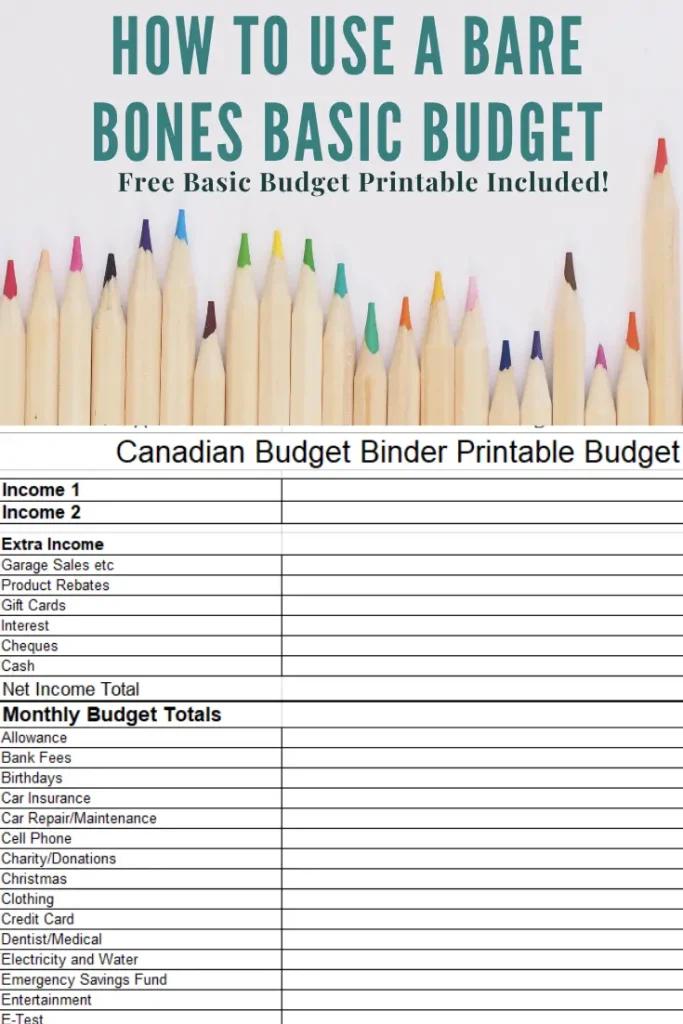
A while back, I wrote a post about how Mrs. CBB and I created a mock budget where we would track our finances based on having a mortgage.
We incorporated everything you must pay for as homeowners so we knew if there would be any holes in our budget.
Thank goodness we did that because that one exercise set the alarm bells, so we didn’t go overboard buying a house.
It also taught us how much money we had to work with when creating certain budget categories.
You may want to create a bare-bones budget to see where you stand and what you need to do to fix your holes.
Even amid a pandemic, if you don’t have a budget, start by researching how to budget and get a move on.
You need to get ahead of what you are already falling behind, even for investment in your future.
I mean, be prepared today no matter what your situation for tomorrow.
Don’t tell me it’s too late. What’s the point? Because THERE IS ALWAYS A POINT.
Especially if you have a family to care for.
Look into your children’s eyes and tell them you will do everything possible to make it work.
4. Eliminating Non-Essentials In Your Contingency Plan
The last thing you need amid a financial crisis is spending money when you aren’t earning any.
Stick to the necessities and find new ways to repurpose what you have.
For example, instead of buying new or second-hand clothes, keep wearing what you have until you can no longer.
Pass clothing along through the children as they grow.
No more snacks in the grocery cart or try to make homemade treats at home for less.
Related: Check out my budget-friendly Free Recipe Depot
Cut eating out at fast-food and take-out restaurants, including stops at coffee shops.
Eliminate movie nights at the theatre and opt for movie nights at home with a bowl of buttered popcorn.
5. Establishing An Emergency Savings
I’ve been saying this far more over the past year than ever in my blogging career.
Watching so many people struggle with their monthly bills has prompted me to discuss the importance of emergency savings.
I struggle when I’m told there are no options to save or they can’t find the money as their budget is tight.
YET, they have a $ 100-a-month smartphone and tell me that is the main phone for their household.
So, get rid of it and get a house phone which is far cheaper in most instances.
I will say that Mrs. CBB’s cell phone payments were reduced to $20 a month, but she has no data.
If you need your smartphone, get rid of the data package and go basic, and there’s your spare cash.
Finding ways to save when you thought you were already saving is not easy but doable.
Just be reassured that the measures you take today will follow you into tomorrow.
Negativity never helps anyone over the rainbow.
6. Flexibility For Your Contingency Plan
As mentioned above, not every emergency you experience financially will have government backing.
There will not be enough resources to take care of everyone all the time, so you need to be flexible in your approach.
Knowing that you have a plan to survive even a year of a downturn is better than scrambling for dollars.
Take restaurants at the minute that can offer take-out only for customers during c-19.
Many restaurants rely on dining room customers as they are not all fast-food or take-out businesses.
Again, just a simple way to ensure there is a plan ahead of the problem and not trying to figure it out during the problem.
7. Information From Reputable Sources Only
Oh, and one more thing, for the love of personal finance, stop asking random strangers on social media how to deal with your situation.
If you don’t know, call and get the information from the horse’s mouth.
What I mean by this is if you are uncertain about your position with this pandemic, call Employment Canada.
- Make the call.
- Call your financial institution
- Make a call to your financial advisor
- Talk to Employment Insurance (EI) with your questions
- Google reputable government websites for information and telephone numbers
Go to Canada.ca, where you will find all the information you need.
Relying on people, you don’t know to plan your future, especially if you don’t have a contingency plan in place and are financially stressed, is not worth it.
It’s one thing to listen to the personal situations of others online and another to base your livelihood around what they say.
Lastly, stay updated on everything happening with current events revolving around your situation.
It may not be a pandemic the next time, but your best bet is that if you create a personal contingency plan today, you’ll have less stress tomorrow.
Discussion: Tell me about your financial contingency plan, whether it’s personal or for your business. Please leave me your comments below.
Mr. CBB
I made a Contingency Plan years ago in case I lose the job (when kids were young), but the possibility that all three of us young, healthy adults will lose incomes and jobs on the same day never crossed my mind. Thank god for EI and hope that we will go back to work after quarantine is over. My situation is not bad I have no dept and 3-month leaving expenses saved an emergency fund. But will it be enough?
Way back in 1996, a week before we closed on our first home, my husband was laid off. We did not know what we were going to do. Luckily my husband was called back to work within 2 weeks. After that we decided to be very careful about our spending and design our budget around one income (although we have multiple sources of income). We are very lucky that we no longer have a mortgage or car payments.
We do have a bare bones budget. This is a budget that details what we can cut immediately if there is a loss of one income (things like Netflix, Crave, automatic savings and investments).
We also have ways to replace income. We have an emergency fund that would last us a few months. An income suite in our basement that would continue to provide more than enough income to cover house insurance, utilities and taxes. We also both have disability insurance through our jobs if we were unable to work due to illness.
I feel very fortunate to be in the position I am in. So far we have both been deemed essential. We also have a plan in place to offer our tenant rent relief if they lose their job.