


Estimated reading time: 8 minutes
Talking to children about money is something all parents need to do, but often aren’t sure how to begin.
This personal finance book is perfect for a child between 4 and 8 years old.
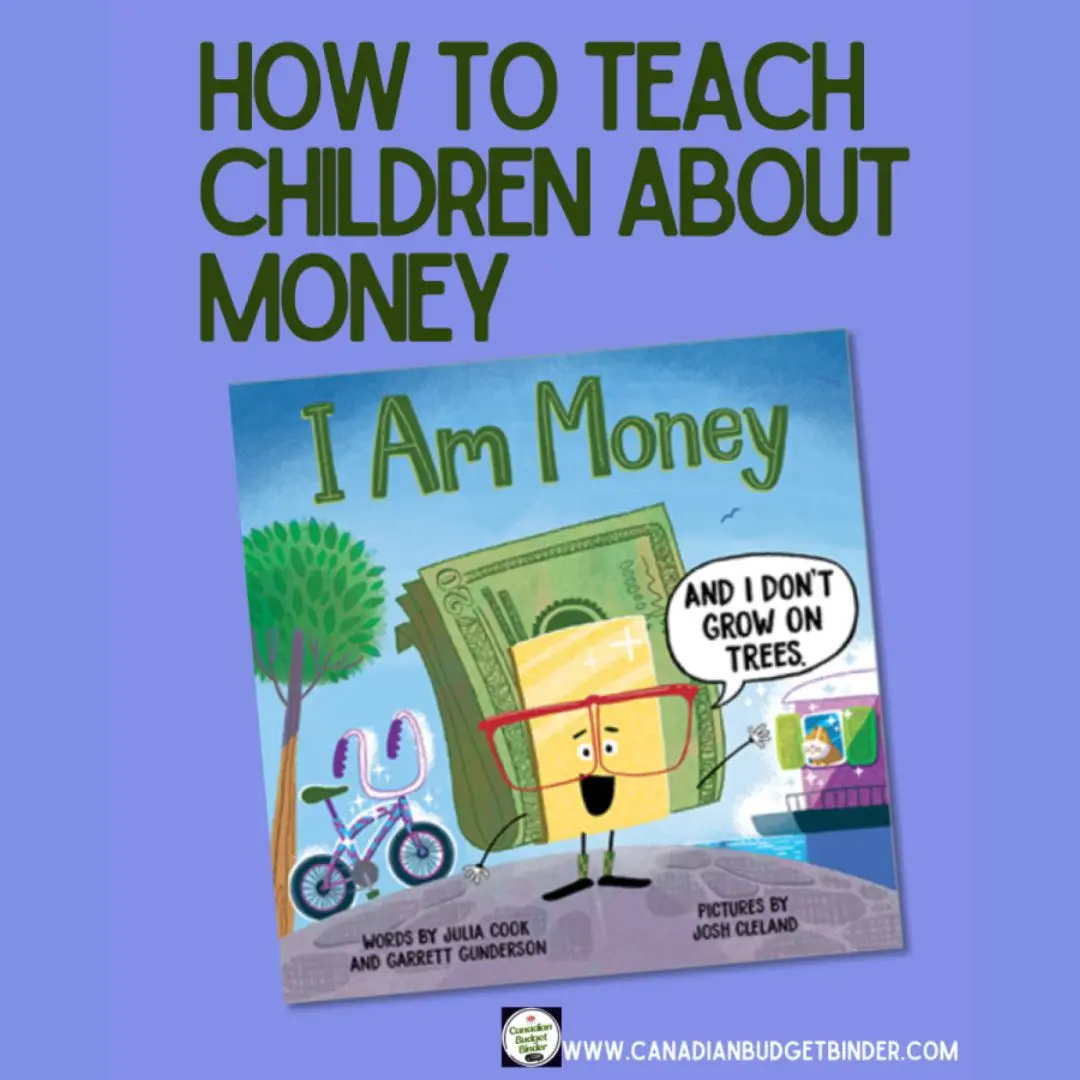
Today, I will offer you some tips to capture your children’s attention and bring them into the world of finance, plus review a new children’s book titled I Am Money.
Thank You to the authors who sent me an advance reader copy to share with our son and my readers.
About I Am Money
I Am Money by Julia Cook and Garrett Gunderson, with illustrations by Josh Cleland. (Available 1/2/24)
- Super accessible for kids―the book is narrated by money itself!
- Teaches basic concepts like earning, saving, investing, and even donating
This is a book for parents to share with their children to help educate them about money slowly to increase their financial literacy.
The Authors
Garrett is an entrepreneur who became a multimillionaire by age 26, is a regular on ABC’s Good Money, and wrote the #1 Wall Street Journal bestselling financial book Killing Sacred Cows.
Julia is a former school counselor who has written nearly 100 books for kids and has been featured on CNN and Parents Magazine.
Her read-aloud skills are unparalleled; check out this video of her reading an excerpt of I Am Money.
More about I Am Money:
In the style of School House Rock, this simple, entertaining picture book from bestselling authors Julia Cook and Garrett Gunderson encourages financial literacy in kids of all ages!
I am MONEY. You work hard to earn me; I can work for you if you’re careful and smart about it!
Introduce kids to the basics of money with this easy-to-understand picture book!
Readers will learn how to earn and save money, spend money wisely, and even use money to invest in themselves. But the most important lesson of all?
The best part of the money is sharing it!
The simple text also helps explain money’s different forms, like cash, cards, and even crypto.
Backmatter with additional money tips makes this fun book a great teaching tool for curious kids!
My Review

Money DOES NOT grow on trees, and the humor and seriousness of the book allow parents to engage and educate their children.
I read this book with our son since he was 9; any finance education is essential.
Besides, he loves money but is just beginning to learn that Daddy has to work to earn it.
Before opening the book, it’s clear that Money is telling the story as the main character.
Once opened, he immediately pointed to all the fantastic photos that would be attractive to children.
The photos include “stuff” kids love, such as bikes, toy trucks, pizza, musical instruments, etc.
We’re off to a good start, as the book has caught his attention.
Vibrant Photos
Somehow, I’m looking at a Spongebob wad of money with a teacher’s board cue.
Nonetheless, the art in this book is fantastic, colorful, and well-detailed.
Money Shares Finance Basics For Kids
Since money doesn’t grow on trees, someone has to earn the money.
What basics does money buy?
I like how the authors kept the idea around money simple but with humor.
It was easy enough so that our son, who has ASD, understood what money was used for.
For example, you can buy pizza, clothes, or a guinea pig with money.
Emotions Surrounding Money
A significant page in the book talks about how money can make us happy but not happier.
Money does not bring happiness. It allows people to be comfortable financially.
Happiness is achieved by being good, helping others, and striving to be your best.
Money is valuable but does not extend to the value of one’s life.
In other words, money holds a value, but we can not use it to buy worth in our lives.
Spending Less Than You Have
Money dresses up as a debit or credit card to show how plastic manipulates people into spending more than they have.
I think every adult knows the power of plastic and how enticing it can be to purchase something you can’t afford.
We see a sale on an item we want or need and reason with our inner self that the bill will get paid once expected money is earned or deposited.
No, life does not work that way unless you want to carry debt and pay absurd interest.
I can’t stress enough how important it is for parents to educate their children about what happens when they can’t pay credit card bills In FULL.
- Debt Collectors
- Lowered Credit Score affects purchase power, including employment, home purchases, and rentals.
- You end up paying bills for extended periods with interest.
- Emotional and physical stress
Money 101 For Kids
I enjoyed this book section because the concept is broken down individually.
- How To Earn Me
- How To Save Me
- How To Spend Me
- How To Give It Away
As the pages go on, Money teaches the kids the above concepts using examples and photos.
Earn cash by working selling lemonade, delivering newspapers, or mowing neighbors’ lawns.
Skip The Piggy Bank
Save cash in the bank or have an investor help you. I was particularly impressed with using money jars instead of piggy banks.
You can see through the glass jars, whereas with a piggy bank, you cannot.
Oddly, you’ll think twice before sticking your hand in the jar to take money out.
If your child wants to save for something, a parent could help them make multiple jars.
They can budget how much to put in each jar if they get birthday money.
Invest In Yourself
Another vital message to share with children is to save to invest in themselves.
Perhaps a child wants to play a sport, take music lessons, or take a course.
Not all parents have savings to continue paying for activities kids don’t want to participate in after the first day.
Having kids invest in themselves may motivate them to find something they love to do.
When you become an expert at what you do, you can use the power to earn more cash.
Giving
This message is crucial because it teaches a child that other people are less fortunate.
Our son donates his clothes and toys to other kids whose parents struggle financially.
At church, he donates food, health and beauty supplies, underwear, and socks that he buys with his savings.
Lead by example.
A Book For Parents And Children
Starting with financial basics is essential, and as they age, introduce the kids to budgeting.
The last thing any parent needs to do is overwhelm a child with too much information.
I love reading children’s books about financial literacy because not all kids listen to their parent’s advice.
One thing I can express is that adults could benefit from this book.
Often, the basics of finance are missed or not understood by teens and adults who would benefit from this story.
Pub date: January 2, 2024, Now Available on Amazon Canada
Ages: 4-8
Hardcover: 9781728271262 | $22.50
Paperback: 9781464220890 | $13.50
You can now order the I Am Money from Amazon Canada.
Discussion: How did you explain money to your children?
Please leave me comments in the section below.
Thanks,
Mr. CBB