


Estimated reading time: 16 minutes
Many frugal living ideas are saturating the online market, so today, I wanted to create a guide that we successfully use.
Increase Savings By Learning What Successful Savers Do
The importance of this guide lies in highlighting what has worked for us to help us become debt-free and achieve this at such a young age.
Well, if you consider 40 young, then we’re young. If you think it is old, then we’re old.
The verbal savings plan Mrs. CBB and I created in 2012 was simple: “It’s not about how much money you make; it’s how you save it.” From there, we took off.
I know you think it’s easier said than done, but trust me, especially when there are so many goals you’d like to tackle at once.
Don’t Stress – One step at a time will help keep you motivated.
I’m not going to list a million ways you can apply frugal living ideas to your life, but rather keep it simple by discussing ideas that work for us.
We didn’t go overboard like some frugal fanatics because that wasn’t the route we wanted or needed to take.
On the other hand, if your debt load is very high and your net income barely covers the bills, consider stricter savings measures.
It may seem harsh now, but you’ll be jumping for joy in the long term!
Frugal Living Ideas That Increase Our Savings Plan
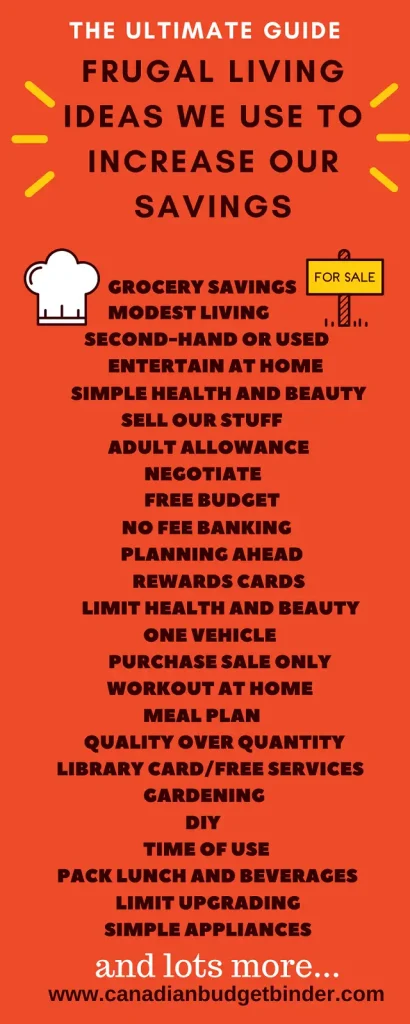
Creating a savings plan must be practical; otherwise, you are likely to abandon it and fail to reach your goals.
Thinking long-term is one of the most important things to consider when increasing savings.
You won’t see a spike in your savings account immediately, but with time and more forced savings, you’ll be happy you started this journey.
These frugal living ideas are designed to provide you with a valuable resource that we use to continue living a debt-free life.
Affordable Living (housing)
Always spend less than you can afford, whether renting or purchasing a home.
The last thing you want to become is house poor, as it’s a cycle that can burn through any savings you might have and introduce you to a lot of debt. Be wary.
Budget and Organization
Don’t pay to use or purchase a budget; you don’t need to when free options are available online.
A simple budget or Excel spreadsheet, which I offer for free, will suffice.
Most importantly, becoming an organized financial expert means you do less work sorting through piles of receipts.
My computer is in my office, and this is where we keep our budget binder.
Quality Over Quantity
Over the years, we’ve learned that just because something is cheaper than a more expensive product doesn’t necessarily mean it’s a smart purchase.
Keep in mind that quality products may last longer, taste better, or work more effectively for you in the long term, financially.
Consider your options before making purchases that will impact your monthly budget.
No-Fee Banking/ Credit Card Fees
Frugal living ideas include small expenses, such as bank fees, that can sneak up on you unnoticed.
No one likes to pay fees, although, for some people, the cost of fees outweighs the personalized services they get at a bank.
We’ve been with PF Financial for over ten years, which has since been rebranded as Simplii Financial online banking, where we’ve been satisfied.
Own And Use A Library Card
You probably don’t need to pay money to get that brand-new book just released, so save your money.
Get a library card and take home books, music, and DVDs for FREE!
We’ve been doing this for years and have never purchased new books; instead, we’ve only bought second-hand ones if they are affordable.
Free is good too.
Pack A Lunch
As it says, pack a lunch and bring beverages to work or anywhere you go, including road trips and excursions.
Once you start adding up all those cups of coffee, tea, hot chocolate, flavoured water, and sports drinks, you’ll see costs mount.
It’s more cost-effective to buy a case of drinks at the grocery store than to purchase individual beverages from vending machines or shops.
We buy coffee grounds and instant coffee when on sale, so we always have it in the house.
The only beverage I splurge on is beer, but I use my adult allowance.
Related: 10 Foods and Drinks To Pack For A Theme Park Visit
Gardening Frugal Living Ideas
You don’t need a vast garden to see savings in your grocery budget.
Even a simple herb garden will do the trick.
We plant a large amount of basil each year and turn it into pesto and seasoning cubes throughout the Fall and Winter months.
In the past, we’ve grown tomatoes, peppers, eggplant, beans, and raspberries in our back garden.
We plan to return to that, but for now, our in-laws’ garden has SO MUCH that we just grocery shop there in the summer.
Related: How To Start A Community Garden
Rewards Cards
If you can use a reward or credit card to earn points or rewards and incur no additional costs, that could help fund your savings plan.
Consider the shops you visit and use a rewards card, even if you don’t go often.
Over time, your points will increase, and you will earn a reward that can be redeemed for products or cash.
We’ve saved a lot of money by using our credit cards to pay for almost everything.
Of course, you should only use your credit card this way if you can pay it in full each month.
Related: How We’ve Saved Over 4 Million PC Optimum Points
Frugal Living Ideas For Getting Fit At Home
Over the years, I’ve created a home gym in our basement by purchasing second-hand workout equipment, including dumbbells, benches, and machines.
We also have a treadmill, a rowing machine, and a step machine.
Only buy what you will use, and consider getting rid of your gym membership.
The costs are too high, and I bet you probably don’t go as often as you should.
Although it depends on the person, most people would prefer to work out at home. On the other hand, you might hate staying at home and choose the company of others in a gym.
Consider your options and what works for you.
Minimize Housing Costs
So far, I’ve minimized costs by replacing the light bulbs with LEDs, weather-stripping the windows, adding insulation, sealing any cracks or holes, and using low-flow toilets and showerheads.
I consider anything I can think of or have researched for my DIY savings plight.
Related: Household Savings Hacks To Reduce Costs
Shop Second-Hand/Sales First
You will almost always find us visiting second-hand shops, garage sales, and buying used or new items with tags by visiting various online websites, such as eBay, Kijiji, LetGo, Varage Sale, and Facebook Marketplace.
You’d be amazed at how much money you can save.
Give it a try; you’ll see the difference.
Related: Is Buying Second-Hand Clothing Worth The Money?
Frugal Living Ideas For Selling Stuff
We bought a product and paid taxes for it, and now we are done using it.
Instead of giving it away, donating it, or throwing it away, we sell it to recoup our costs.
There are plenty of occasions when we donate items, but that’s only because the item is not a hot seller or a needed item at the church, such as baby clothes for needy parents.
The idea is to consider what you already own as a form of money in the bank. Sell it for fast cash.
Think and prepare ahead.
Whether you are shopping for a house, consider shopping ahead of time for the best seasonal deals.
We often find the best deals off-season because the demand for such products is lower, especially at second-hand shops or online selling apps.
Frugal Living Savings Include Negotiations
I never assume that I can’t negotiate for something unless it’s obvious you can’t, such as a ticket from a police officer for speeding.
Whether near-expiry food products, utilities, vehicles, or items I want to buy in bulk, I always ask for a discount.
There’s no harm in making an offer on something you want, even if it is second-hand.
Related: How To Negotiate With Rogers Communications
Own One Vehicle
Although I’d love to ride a bike to work or take the city bus, that’s impossible given the time frame and distance to my employer.
What we have done this past year is sell one vehicle and buy a truck that was used as a test-drive vehicle at the dealership.
Huge Savings!! $40,000 off the price tag.
With one vehicle, we only need insurance for one instead of two, as we’ve had over the past eight years.
DIY Projects Instead Of Hiring
I’m a DIY guy, but only for things I know I can do or attempt to do.
Regarding skilled trades, I don’t pretend to be experienced, although I am familiar with the basics of some trades.
In the past, I’ve changed my oil; however, my new truck is under warranty and must be brought to a dealer.
Once that is over, I’ll return to doing it myself.
Time Of Use Electricity Frugal Living Savings Tips
We typically unplug appliances we don’t use and run the washer during the cheaper time-of-use rates.
Most of our clothes hang to dry, and those in the dryer are monitored.
The worst thing you can do is over-dry clothes, costing you money, and let’s be real, clothes don’t like the dryer.
Our thermostat is preset at 21 degrees during the day and drops to 18 degrees overnight during the winter months, which has helped us keep our electricity costs stable.
During the summer, we use the central air conditioning system, but only as needed, to help reduce costs.
We used to watch when we cooked, but it’s not practical for those parents or individuals who don’t want to start cooking at 7 pm.
Using small kitchen appliances, such as the crockpot, countertop oven, griddle, and toaster, is a cheaper alternative for us rather than running the big stove and oven off-peak.
Buy Sale Only
This one is simple: buy only what you need when it is on sale, unless you absolutely must have it and are willing to pay full price.
Source Price/Price Matching
Before you buy at full price or even sale price, make sure you know your prices by checking other shops and services that offer what you need.
If you can price-match, don’t miss out on those savings, too.
Adult Allowance
Yes, I receive an allowance that I use every month, and if there is anything left over, I add it to our savings account.
I also use my allowance to pay it forward, such as when I go for a coffee at the shop or treat myself.
It’s really to spend on whatever I want.
Having an allowance has allowed me to control my urge to shop.
Limit Upgrading
You don’t need to upgrade everything you own or don’t own just because there’s a new, excellent version on the market.
Cell phones are the most significant upgrade people jump into, although each situation is unique.
Upgrading to the latest video game systems, televisions, tablets, computers, and new vehicles every year is unnecessary to save money.
Limit Health And Beauty Treatments
We get our haircuts from an in-home stylist who also threads Mrs. CBB’s eyebrows for five dollars.
We don’t need to go to expensive salons for these services.
Although I have benefits from work that fully cover massages and other health services, I also project my expenses for the year and save for them.
Mrs. CBB is also not a fan of fake nails, professional hair colour, styling, or fancy treatments that help keep women looking young.
She likes to age gracefully.
Do you know that getting Botox filler in your lips costs over $800, and it’s not even permanent?
We occasionally splurge on a pedicure for Mrs. CBB, as she tends to have dry feet.
There are also health reasons that some people may need treatments, but those don’t count.
Grocery Shopping/Eating In
You’ll find anything and everything to do with our grocery savings in our Ultimate Grocery Savings Guide, from couponing, stockpiling, price-matching, sales, rewards cards, meal plans, and so on.
Take a moment to read about what applies to you, which will help you better understand the concepts and equip you with the knowledge you need for grocery shopping.
We limit our eating out to simple things, such as the occasional muffin or pizza, because we often pack snacks for ourselves when we’re on the go.
Related: Copy Cat Tim Hortons Chocolate Chip Muffins Recipe
For example, on our recent trips to London to see my father-in-law in the hospital.
We packed a large bag of fruits, vegetables, cheese, and protein sources, including hard-boiled eggs, pepperoni sticks, and salami.
Related: Saving Money Packing Food For A Road Trip
Simple Appliances
It’s true that the more gadgets and the latest technology you stuff your home with, the bigger your bills will become, especially if appliances need repair.
To reduce the excessive amount of money spent on technological upgrades, we have an older electric stove and a 15-year-old Energy Star-rated bottom-freezer refrigerator.
Although it’s nice to have all the latest kitchen gadgets, try to keep it simple and only own what you will use.
I understand how easy it is to get kitchen happy when shopping, especially for second-hand items, as many are available on shelves and online for sale.
Limit the number of pots, pans, bakeware, containers, water bottles, and other items to what you will actually use.
Many of you reading this right now can think of kitchen stuff you haven’t used in ages that is collecting dust.
Don’t waste money.
Your Savings Plan Begins Now
It’s essential to consider each budget category to identify areas where you can cut costs and improve your savings plan.
It’s better to save something than nothing, and I hope you can adopt some of our Frugal Living Ideas.
- Train Your Brain To Save
- Explore Your Options
- Apply Self-Control
- Fight The Urge To Compare
Discussion: What are some frugal living ideas that aren’t on our list but you use that help you with your savings plan?
Leave me your comment below after reading our January 2018 Budget Update!
Where Our Money Went In January
January wasn’t the best month we’ve had, by any means. Mrs. CBB took advantage of the post-Christmas clothing sales, resulting in a higher-than-usual clothing category.
We’ve also made some changes to our investments.
Jr CBB also goes to daycare once a week to prepare for school, so we’ve added that category to the budget.
Gasoline prices were significantly higher than usual due to unforeseen travel, although they have been elevated lately.
The parking fees were from our various trips to the hospital, which were less than we expected compared to hospital parking in Toronto or even Hamilton.
You’ll also notice that our budget has a Christmas Reserve Fund category to help us save for Christmas food.
Our grocery budget increased this year because our son is starting school and eating a bit more.
Mrs. CBB also lives the keto lifestyle and has experimented more with low-carb products.
That’s all from us!
Have you made any adjustments to your 2018 budget?
Mr.CBB
Our FREE Simple Budgeting Series
Would you like to learn how we budget?
Please take the time to read through our budgeting series, as well as our article on Budgeting in the New Year. I hope the information will help you avoid common budgeting mistakes.
- How We Designed Our Budget Step 1– Gathering All the Information
- How We Designed Our Budget Step 2– Budget Categories
- How We Designed Our Budget Step 3– Tracking Receipts
- How We Designed Our Budget Step 4- Note-taking
- How We Designed Our Budget Step 5– 5S Organization
- How We Designed Our Budget: Step 6 – Who Does What and When?
- How We Designed Our Budget Step 7– Balancing Our Budget
- How We Designed Our Budget Step 8– Knowing our Coupon Savings
- How We Designed Our Budget Step 9– Reading Our Bills
- How We Designed Our Budget Step 10– Projected Expenses
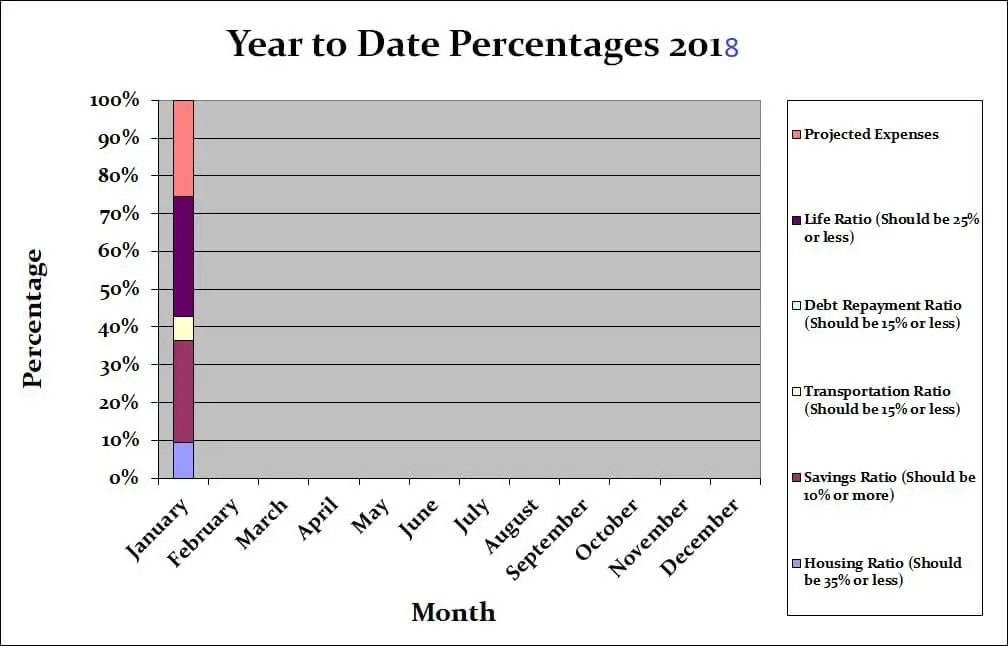
Budget Percentages January 2018
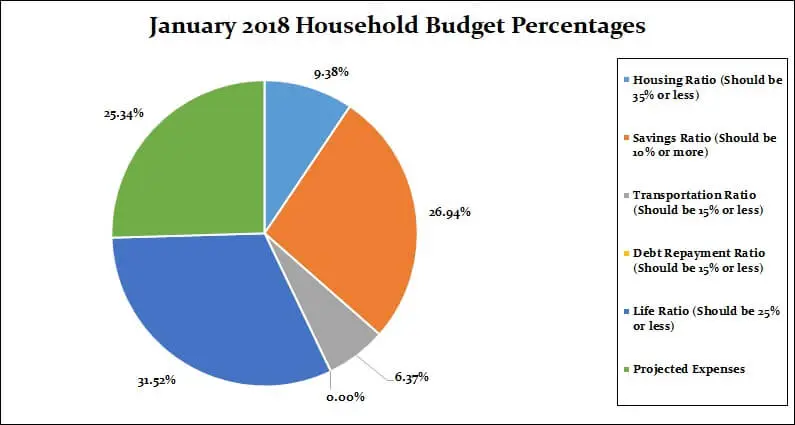
Our savings of 26.94% include investments and any savings for this month, based on an income of $ 7,665.83.
We set aside money for the projected expenses that will be incurred in the coming months.
The other categories were pretty standard this month, except the Life Ratio.
All categories accounted for 100% of our income, indicating that all the money we earned for the month is accounted for.
Budget Percentages Month By Month
Breaking down expenses
Below is a breakdown of our expenses, which has helped us understand where our money goes.
Since May 2014, we have been mortgage-free, so a significant portion of our money will be directed towards savings, investments, and renovations.
I appreciate that you look forward to receiving this budget update each month.
However, I hope you view this as an educational tool rather than comparing your financial numbers, as our situations are all unique.
Spending less than we earn and budgeting our money has been the easiest way for us to pay down debt and save money.
- Chequing – This is the bank account from which all our debts are paid.
- Emergency Savings Account– This is a high-interest savings account.
- Regular Savings Account– This savings account holds our projected expenses.
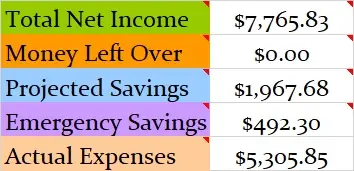
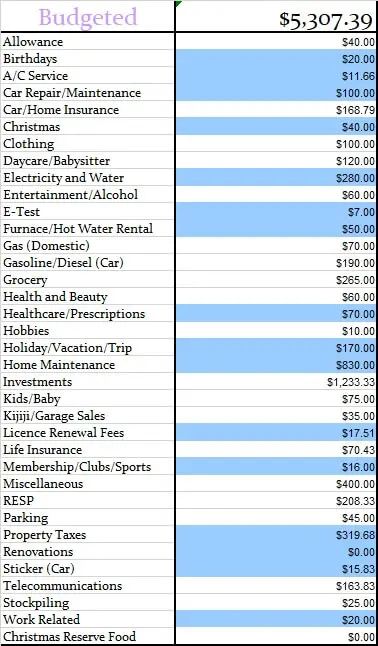
- Monthly Budgeted Total: $5,307.39
- Monthly Net Income Total: $7,765.83
- (Check out our Ultimate Grocery Guide to see where our grocery money goes)
- Projected Expenses: These are expenses we know we will pay for throughout the year = $1967.68
- Total Expenses Paid Out: $5,305.85
- Total Expenses Paid Out: Calculated is $7,776.83 (total net monthly income) – $1,967.68 (projected expenses) – $492.30 (savings into emergency fund) = $5,305.85
- Actual Cash Savings going into Emergency Savings: Calculated is $7,776.83 (total monthly net income) – $5,305.85 (actual expenses paid out for the month) – $1967.68 (projected expenses) = $492.30
Budget Results
It’s time to review the juicy category numbers and see how we fared with our monthly budget.
Below you will see two tables, one is our monthly budget, and the other is our actual budget for January 2018.
This budget represents two adults, a toddler, and our investments.
Budget color chart
If highlighted in blue, this indicates a projected expense.
You will also see our budget does not include the emergency savings as it’s factored in at the end.
Budget For January 2018
Actual Budget Expenses For January 2018
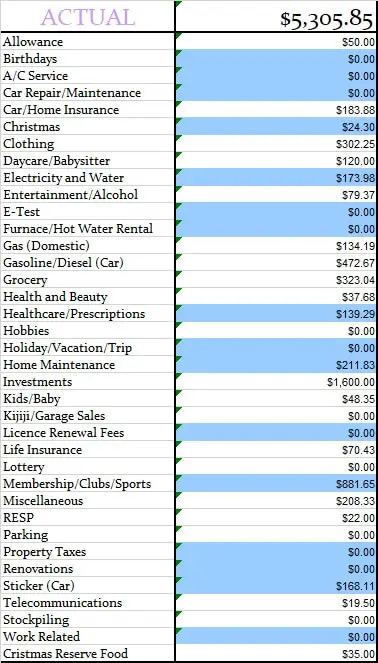
Yes, I know I spelled ‘Christmas’ incorrectly, and I will correct it for the next budget update.
Budget Updates Month By Month
If you missed our budget updates and would like to conduct a quick search, I’ve compiled them on a handy page: monthly budgets.
For the 2018 year, I will also keep track of each month below and update the monthly budgets page.
That’s all for this month. Check back at the beginning of March 2018 to see how we made out with our February budget.
Makes so much sense – I just want to relate how second-hand can have a huge impact. I and my family have been helping a young family with 2 small boys. The Grandma is a friend from our church and when she told us that her soin & family had lost everything I just had to help. BUT – how to do so? I don’t have adequate finances to allow me to go out and buy needed items, so I got to work online – on Kijiji and on several giveaway groups in our area. here’s what I have been able to amass for them, with my only eexpense being gas for pickup. Clothing for all 4 family members, a race-car toddler bed, lamps, sofa, entertainment centre, TV, an oval solid wood kitchen table plus 4 chairs from another offer. Then there are the kitchen items, china, glass, pots and pans, toaster oven, toys & books for the boys and a potty!! The list goes on – my point is, one does not need to spend a fortune. When you literally have nothing, items can be found to get you back on your feet, through the generosity of neighbours, friends and strangers. All the items (except clothing which we have already delivered) will be delivered once they find an apartment. They – and Grandma – have been living in a hotel room for the past month, Grandma helping with the kids and making meals on a hotplate while both parents work. This has had quite an impact on me, I thought I was pretty frugal, but my eyes have been opened to 1) how much excess stuff we have stored in our homes, 2) how one can do a lot more with very little expense and 3) how much caring still exists in our world.
Hi Mary,
This is wonderful and thanks for helping this family out. I agree that if you need something it can always be found for free or very cheap. Last night we picked up a free tv for the inlaws since their TV is no longer working. Turns out I knew the guy and we had a great chat.